

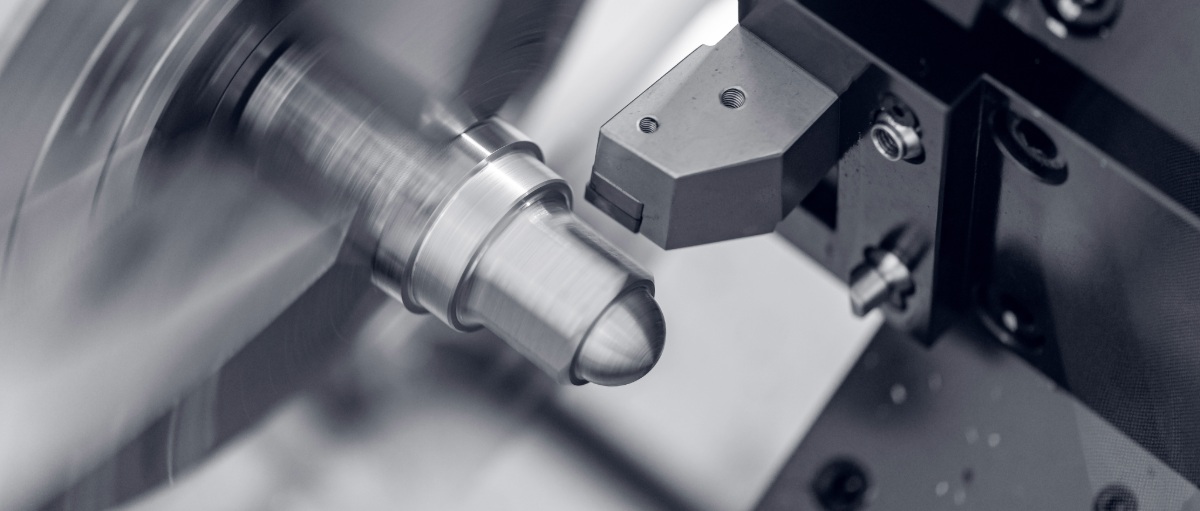
Production CNC turning in Independence, MO, is used when manufacturers need repeatable round components with consistent sizing, threading, bore work, grooves, shoulders, and related machined features.
Roberson Machine Company machines production CNC turned parts and replacement components for manufacturers that need dependable part-to-part results.
Learn More About
- How CNC turning supports production parts
- Common CNC turned parts
- Production runs, repeat orders, and bulk work
- What happens from drawing to production
- Choosing materials for turned components
- Related CNC work used alongside turning
- Common applications for turned production parts
- Helpful FAQs about production CNC turning in Independence, MO
For production runs, replacement components, or repeat orders involving CNC turned parts, contact us online or call 573-646-3996 to discuss production CNC turning in Independence, MO.

How CNC Turning Supports Production Part Runs
CNC turning fits production work when a part relies on round geometry and repeatable turned features. The process helps manufacturers produce the same component again and again without changing the basic part requirements.
Round geometry that repeats cleanly
CNC turning is well suited for parts where the main geometry is round and the critical features need to stay consistent from part to part.
- Outer diameters and shoulder features
- Internal features, grooves, and fit surfaces
- Threads, chamfers, and repeat turned details
Repeat-run efficiency
For the right part geometry, CNC turning can move efficiently from one piece to the next once the material, setup, and part requirements are established. That makes it useful for production orders where the same component needs to be machined across a run.
Reliable repeat production
Production CNC turning is often used when a manufacturer needs the next part to match the last one. That matters for replacement components, repeat orders, and assemblies where fit depends on consistent turned geometry.
Production CNC Turned Part Examples in Independence, MO
Production CNC turned parts are often round components used where fit, movement, spacing, fastening, or fluid control affects how an assembly works. Many rely on cylindrical and rounded forms that need to repeat consistently across the order.
- Shafts, pins, rollers, and similar round parts
- Spacers, bushings, and sleeves
- Adapters, collars, and couplings
- Studs and other threaded production components
- Fittings and valve components used in fluid-control assemblies
- Replacement components made from drawings, CAD files, samples, or part requirements
Related work from Roberson Machine Company includes drive shafts, ink rollers, valve body components, and end-of-arm robot tooling parts used in different production and assembly applications.
The exact part mix depends on the material, geometry, quantity, and end-use requirements. The examples above show how turned parts can support motion, spacing, fastening, fluid control, replacement work, and production assembly needs.
How CNC Turning Supports Repeat Production Work in Independence, MO
Production CNC turning helps when the same turned part needs to be made across an initial run and future orders. After the requirements, material, and machining approach are established, repeat work can usually move through review more efficiently.
That matters when a repeat order needs to pick up from known requirements instead of starting over again.
- Repeat orders: Returning work is easier to review when the component has already been machined for maintenance, stocking, repair, or production needs.
- Part families: Related components may share material needs, turned features, similar part shapes, or fit requirements.
- Replacement components: Worn or hard-to-source round parts may need to match an existing assembly, sample part, or drawing.
- Broader production machining: When a turned component also needs milling, drilled features, inspection, or related work, precision CNC machining helps connect the turned part to the larger machining requirement.
Bulk Part Production and CNC Turning in Independence, MO
For higher-volume turning work, the turned component may be part of a broader bulk part production with CNC machining need. A clear machining approach helps support the current run and makes later orders easier to revisit.
- Repeat part geometry: CNC turning supports repeatable geometry when round features, internal bores, threaded details, or mating surfaces have to stay consistent.
- Predictable production planning: When production details are clear early, returning orders can be easier to quote, schedule, and repeat.
- High-volume support: For larger orders, high-volume CNC machining planning helps connect the turned part to material needs, setup decisions, inspection, and production goals.
- Related machining steps: When a turned component also needs flat, slotted, drilled, or milled features, CNC milling for high-volume production parts may be part of the production path.
Roberson Machine Company can review the production quantity, schedule, material requirements, and turned-feature details before the work moves forward, helping Independence, MO, production CNC turning support both immediate and returning part needs.
How CNC Turning Turns Drawings Into Production Parts
Most production CNC turning jobs start with the part definition, including drawings, CAD data, sample parts, material requirements, and quantity expectations.
- Review the part requirements: Material, quantity, turned geometry, and fit requirements are reviewed first to define the part needs.
- Confirm the production approach: Production may involve turning only, or turning combined with milling, drilling, and inspection steps.
- Machine and check the parts: Parts are produced and checked to confirm alignment with drawings, samples, or production requirements.
That same information helps future repeat work run more predictably when the job comes back.
Materials Used for CNC Turning Projects in Independence, MO
CNC turning can be used with many metals and plastics, but the right material depends on how the part needs to perform. Fit, wear, corrosion resistance, weight, cost, and production quantity can all affect the material choice.
- Aluminum: Often used for turned parts that need lower weight, good machinability, and reliable production performance. Roberson Machine Company also supports related aluminum CNC machining work.
- Stainless steel: Common for parts that need corrosion resistance, durability, or cleanability in demanding environments. Roberson Machine Company also supports related stainless steel machining.
- Carbon and alloy steels: Selected for parts requiring wear resistance, strength, and reliable mechanical performance.
- Brass, bronze, and copper: A common choice for specialized turned parts needing conductivity, wear resistance, or low-friction behavior.
- Machined plastics: Materials such as Delrin, nylon, PEEK, and HDPE may be used for lightweight, low-friction, insulating, or chemical-resistant turned components.
Material choice can affect how the part machines, how it wears, how it fits with mating components, and how it performs in the finished assembly. Roberson Machine Company can review the part requirements, material callout, production quantity, and related common materials used in CNC machining before machining.
What CNC Machining Methods Are Used Alongside Turning?
Production CNC turning may be combined with other machining methods when the part requires more than round geometry, including additional features, orientations, or inspection steps.
Turning first: Diameters, shoulders, grooves, bores, threads, and other round features.
Supporting operations: CNC milling for flats or pockets, Wire EDM for slots or specific profiles, and 5-axis machining or multi-axis machining for features that require multiple access angles.
The goal is to choose the most appropriate process based on geometry, material, quantity, and end-use requirements.
Industries That Use Production CNC Turned Parts in Independence, MO
CNC turned parts appear across multiple industries where consistent round geometry, replacement components, and assembly hardware are required. The focus is always repeatable performance in the finished equipment.
Aerospace & automotive manufacturing
Turned shafts, bushings, collars, spacers, tooling details, and support components may be used in assemblies where fit, motion, and repeatable production matter.
Medical and lab instrumentation
Medical and instrumentation work often relies on clean turned features and consistent geometry for instruments, valves, and precision support components.
Automation and robotics
Automation work often depends on repeatable turned components for motion systems, fixtures, tooling, adapters, end-of-arm tooling, and parts that need to locate or move consistently.
Packaging systems and production machinery
Packaging systems often rely on rollers, shafts, spacers, wear parts, and replacement components that must fit existing equipment and withstand repeated production cycles.
Oil and energy operations
Turned components support pump systems, valves, fittings, and replacement parts where durability and consistent performance are required.
The focus of Roberson Machine Company’s turning work is not a single industry but the part requirements: round geometry, repeatable features, material fit, and performance inside larger assemblies.

Common FAQs About Production CNC Turning in Independence, MO
Customers typically ask about part fit, quoting details, and repeat production support. These FAQs address CNC turning questions related to materials, geometry, replacement components, bulk orders, and additional machining steps.
How do you quote production CNC turned parts in Independence, MO?
A drawing, CAD file, or sample part is typically the best starting point. Material, quantity, fit requirements, key turned features, timing, and inspection needs help define the production approach.
Helpful quoting details include:
- Existing drawings, CAD data, or samples
- Material selection and callout
- Critical turned features like diameters, threads, bores, grooves, and shoulders
- Production quantity and repeat expectations
- Required inspection, finishing, or documentation
Early input can help identify whether CNC turning is the main process or part of a larger machining workflow.
What types of parts are best for CNC turning?
CNC turning is typically used for round components with consistent, repeatable features such as:
- Round features such as diameters, threads, bores, grooves, shoulders, and tapers
- Mechanical components: shafts, pins, bushings, sleeves, spacers, and collars
- Couplings, fittings, rollers, and replacement parts
The best applications are parts where round geometry directly affects how the assembly fits, moves, seals, or fastens.
What materials can CNC turning handle?
CNC turning can be used with many metals and plastics, including:
- Aluminum, stainless steel, carbon steel, and alloy steel
- Brass, bronze, copper, and other machinable metals
- Delrin, nylon, PEEK, HDPE, and other machinable plastics
The best material choice depends on performance needs like fit, wear, corrosion resistance, weight, cost, quantity, and application environment.
Can CNC turning handle bulk production and repeat orders?
CNC turning supports bulk and repeat work when the part design, material, quantity, and inspection needs allow for a consistent setup.
Prior job information helps make future production runs easier to review and process.
What details are needed for production CNC turning in Independence, MO?
Key details typically include material, quantity, turned features, fit requirements, inspection needs, and potential repeat order expectations.
Providing a drawing, CAD model, sample, or material callout helps clarify machining requirements and inspection expectations.
When does a CNC turned part need secondary operations?
Secondary machining may be required when turned parts include non-round geometry, multiple faces, or features that cannot be produced through turning alone.
A full review of the part helps determine which machining methods fit the geometry, material, quantity, and final assembly requirements.
Can CNC turning be used for replacement parts?
CNC turning is often used to reproduce worn or unavailable round parts when sufficient information exists about geometry and fit.
A drawing, CAD file, or sample part helps evaluate whether the replacement component is a good fit for turning.
What factors affect CNC turning pricing?
Cost depends on material, quantity, geometry, feature complexity, setup requirements, inspection needs, secondary operations, and delivery timing. Simple turned parts are priced differently than complex components with additional machining steps.
A clear cost picture comes from early review of part requirements, production quantity, material, and repeat order potential.
Production CNC Turning in Independence, MO With Roberson Machine Company
Roberson Machine Company provides CNC turning for production parts where repeatable geometry and consistent fit are required.
Turning for repeatable round features
Our team can review turned features such as diameters, bores, shoulders, grooves, threads, mating surfaces, and other details that affect fit across a production run.
Support for production runs and recurring orders
Production turned parts often return as repeat orders, replacement work, inventory needs, or larger runs. We support components where consistency across orders matters over time.
Review from drawing, CAD file, sample, or part requirements
Drawings, CAD files, sample parts, material requirements, quantities, fit details, inspection needs, and repeat-production expectations can all be used for review. We help define the machining path from that information.
Related services and machining capabilities include:
- Automated CNC Milling Machine
- Plastic Machining
- Laser Engraving
- Wire EDM Parts
- Lathe Machine
- Precision Stainless Steel Machining
- CNC Lathe Machining
- Custom CNC Machining for Part Production
- CNC Machine Automation
- Oil and Gas Precision Machining
Roberson Machine Company helps source CNC turned components built around repeatable geometry and consistent production requirements. Learn more about how CNC turning can help your business, or contact us online to discuss production CNC turning in Independence, MO. You can also call 573-646-3996.