CNC machining cuts plastic rather than using heat to form it. The process removes material from solid stock to create the finished shape. Heat is a byproduct of cutting, not the mechanism that makes the part.
Manufacturers choose plastic because it can reduce component weight and provide properties such as electrical insulation or corrosion resistance. Plastic machining brings those properties to components that need precise features, but the production plan must account for how the selected material responds to temperature.
In this article:
- Where heat comes from during plastic machining
- Which thermal properties matter when machining plastic
- How common machining plastics respond to heat
- How heat is controlled during machining
- How cold temperatures affect machined plastic parts
- When heat should influence material choice
- Common FAQs about plastic machining
Roberson Machine Company machines plastic components for prototypes, replacement needs, and production orders. Contact our team online or call 573-646-3996 to discuss your material, part requirements, and production schedule.

Where Does Heat Come From During Plastic Machining?
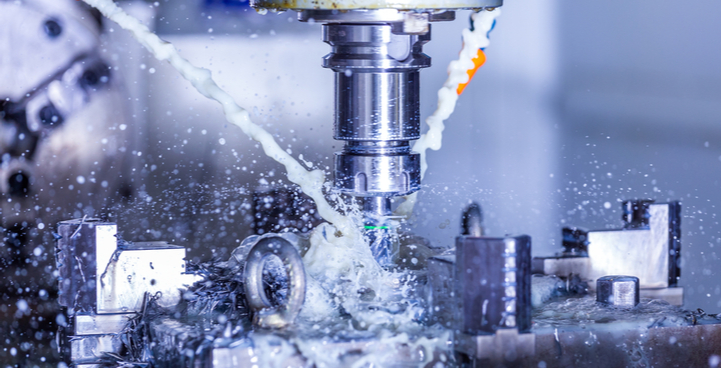
During precision CNC machining, heat develops where the cutting edge separates material from the stock. Some heat leaves with the removed chips, while the rest transfers into the cutting tool and the plastic part.
Temperature can rise around the cutting area because of:
- Friction between the tool and plastic
- Material deformation as each chip is formed
- Chips remaining near the tool or entering the cutting path again
- Extended tool contact inside holes, pockets, or deeper features
Generating heat is unavoidable. Problems begin when heat builds near the cut faster than the machining process can carry it away.
Which Thermal Properties Matter When Machining Plastic?
Several thermal properties determine how heat moves through plastic and how the part responds as its temperature changes. They affect both the cutting process and what happens after the component cools.
Low Thermal Conductivity
Thermal conductivity describes how readily heat moves through a material. Metals generally conduct heat well, while most plastics transfer it much more slowly.
That difference allows heat to remain concentrated around the tool instead of spreading through the stock. A small cutting area may become hot enough to soften even while the rest of the part remains relatively cool.
Thermal Expansion
Plastic expands as it warms and contracts as it cools. A component machined or measured while warm may change after returning to room temperature. This can affect holes, bores, mating surfaces, and other features that control how the finished part fits.
Heat-Induced Softening
Some plastics are naturally softer or more compliant than others, but additional softening caused by machining heat can change how the material cuts. Instead of forming a clean chip, overheated plastic may smear, stretch, or deform under the cutting tool.
How Do Common Machining Plastics Handle Heat?
Heat may change a plastic’s dimensions, stiffness, or cutting behavior before it reaches its melting point. The response depends on the material, operating temperature, and properties such as glass transition temperature.
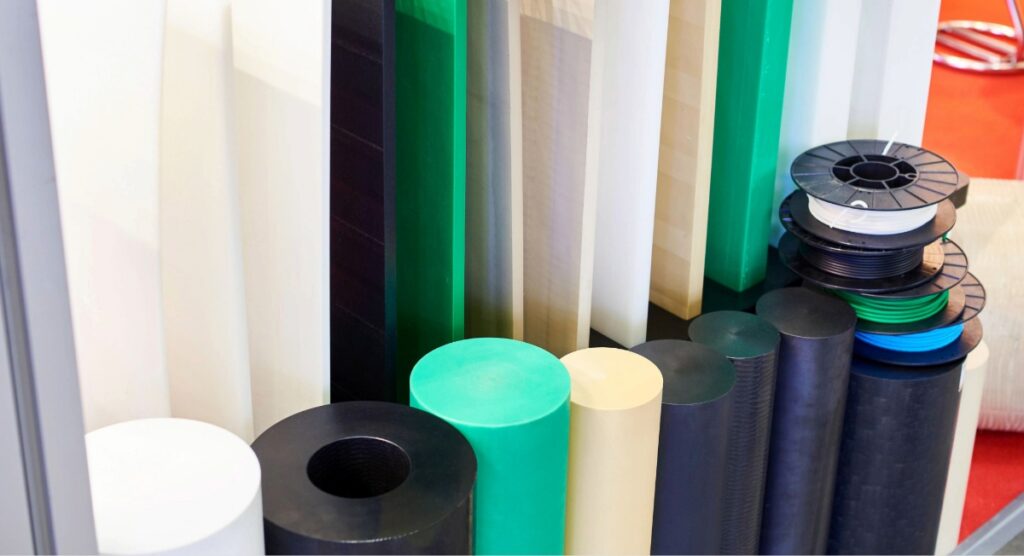
| Plastic | Useful Properties | Heat Considerations |
|---|---|---|
| Acetal | Low friction and stable dimensions | May soften around a hot cutting edge |
| Nylon | Toughness and abrasion resistance | Expands when warm; moisture adds movement |
| Acrylic | Rigidity and optical clarity | Excess cutting heat may soften the material or affect surface quality |
| PTFE and UHMW | Low friction and chemical resistance | Expand readily and may move during cutting |
| PEEK | Strength at elevated temperatures | Still needs controlled cutting heat |
How Is Heat Controlled During Plastic Machining?
Machinists control heat by making clean cuts, clearing chips quickly, and applying cooling when needed. The tooling and cutting settings must suit the selected plastic.
- Sharp tooling and correct speeds and feeds reduce rubbing. The tool should remove a clean chip instead of pushing or smearing the material.
- Adequate flute space and chip-clearing cycles move hot material away. Compressed air may also keep chips from collecting around the cutting edge.
- Air, mist, or compatible coolant can carry away additional heat. The material and cleanliness requirements determine which method fits the part.
Do Cold Temperatures Affect Machined Plastic Parts?
Cold temperatures change both the dimensions and mechanical behavior of machined plastic parts. The amount of change depends on the resin, grade, exposure time, and forces acting on the component.
What Changes When Plastic Gets Cold?
- Thermal contraction can change fit and alignment. Holes, shafts, seals, and mating features may behave differently at low temperatures than they do at room temperature.
- Cold can reduce flexibility and impact resistance. A plastic that bends under ordinary conditions may become more likely to crack when loaded, struck, or placed under vibration.
Temperature cycling can be more demanding than steady cold. Parts used outdoors, inside refrigerated equipment, or near changing process temperatures repeatedly expand and contract. That movement may affect fit or concentrate stress where the plastic is fastened or restrained.
Should Heat Stop You From Machining a Plastic Part?
Heat should not automatically rule out a machined plastic part. Choosing plastic instead of metal depends on how the material will perform under the temperature and demands of the application.
Operating Temperature and Load
Short temperature spikes affect a part differently than continuous heat. The material must also support the required load while warm.
Dimensional Requirements
Parts with tight fits, mating features, or critical tolerances may require a plastic with greater dimensional stability across the expected temperature range.
Broader Operating Conditions
Chemical exposure, moisture, cleaning, and sterilization may narrow the material options. The selected plastic must handle these conditions alongside the expected temperature.
When those requirements align, plastic may reduce weight, resist corrosion, limit friction, or provide electrical insulation without sacrificing the component’s function.
FAQs About Heat and CNC Plastic Parts
Can plastic melt during CNC machining?
Plastic may soften or melt when cutting generates heat faster than the process can remove it. Sharp tooling, suitable cutting conditions, and effective chip removal help prevent this buildup.
Does machining heat affect plastic part tolerances?
Yes. A warm plastic part may expand and produce different measurements after it cools. Temperature-sensitive components may need time to stabilize before final inspection.
Can coolant be used when machining plastic?
Air, mist, or liquid coolant may be used when compatible with the plastic and finished application. Material response and cleanliness requirements help determine the appropriate cooling method.
Which plastic is best for high-temperature parts?
PEEK is commonly selected for demanding temperatures, but no material fits every application. Continuous temperature, load, chemical exposure, required dimensions, and material cost should guide the choice.
Plan for Heat Before Machining Plastic
Heat is a normal part of CNC machining, but plastics leave less room to ignore it. Material behavior, part geometry, tooling, cutting conditions, and the component’s operating environment all affect how temperature should be managed.
Roberson Machine Company plans plastic machining around those requirements from the start, with the goal of producing accurate parts that remain suitable for their intended service conditions.
Have a plastic part to produce? Contact Roberson Machine Company or call 573-646-3996 to discuss your material, part requirements, and production needs.