CNC turning is used to machine round parts from rotating stock. It is often the right process when a part needs to fit cleanly, rotate smoothly, or hold the
Roberson Machine Company provides CNC turning services for customers who need dependable turned components. Share the part requirements, material, and quantity, and our team can help determine whether turning is the right fit.
In this article, learn:
- What happens during the CNC turning process.
- Why manufacturers use CNC turning for controlled, repeatable parts.
- Which industries commonly use CNC turning.
- How material choice affects CNC turned parts.
- Answers to common CNC turning questions.
Ready to review a turned part or upcoming production need? Roberson Machine Company can help you determine whether CNC turning is the right machining approach. Contact our team or call 573-646-3996 to get started.
Lathe Work and CNC Turning
Part of understanding what CNC turning is comes from older lathe work: the material rotates while a cutting tool shapes it. Modern CNC turning uses that same basic idea, but the machine controls the cutting path and tool movement more consistently than hand-operated turning. That shift is part of the broader history of CNC machining.
How Does CNC Turning Work?
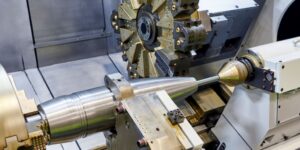
CNC turning works by holding material in a lathe and rotating it while a cutting tool removes stock from the surface. As the material spins, the tool can be used to:
- Control the outside diameter of the part.
- Shape the face or end of the workpiece.
- Create a bore through the center.
- Add threads, grooves, or other turned details.
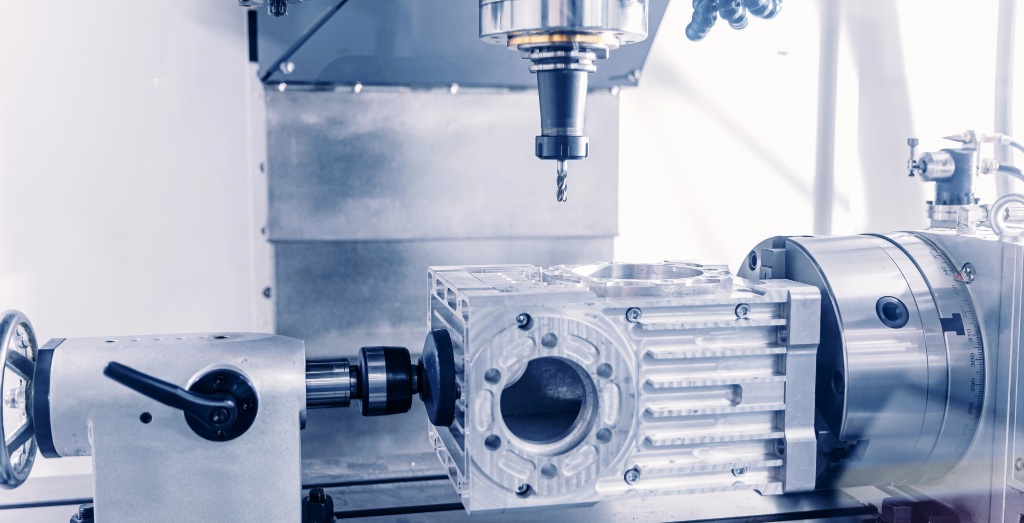
That setup is different from CNC milling for high-volume production parts, where the cutting tool rotates against a more stationary workpiece. Turning is usually the cleaner fit when the part is built around a centerline.
Why Do Manufacturers Use CNC Turning?
When the same part needs to be made again, CNC turning becomes less about a single setup and more about the larger production plan. Production CNC turning helps connect the part requirements with the quantity, schedule, and repeat-order needs before the job moves forward.
Parts built around a centerline
Round parts often need more than a round outside shape. They may need to line up with bearings, slide into an assembly, rotate against another component, or hold a consistent relationship between one surface and another. CNC turning gives the shop a controlled way to build those relationships into the part.
Repeatable production work
Turning is useful when the next part needs to match the last one. Once the material, setup, tooling, and part requirements are established, the same machining approach can support:
- High-volume part production where consistency matters across the full quantity.
- Replacement components that need to fit existing equipment.
- More cost-efficient repeat work when the same setup supports multiple pieces or future orders.
Machinist-led setup
CNC turning reduces the variation that can come from manual movement at each step, but the machinist still drives the work. Setup, tooling, inspection, and production decisions all matter before the machine carries out the cutting process.
What Industries Use CNC Turning?
CNC turning is used in many industries because round parts show up inside machines, tooling, field equipment, and finished products. The part may be simple or highly specific, but the question is usually the same: does the finished piece need to work around a central axis?
- Aerospace: Small hardware, tooling details, and assembly parts may need careful planning before machining begins.
- Automotive: Shops may need parts for fixtures, test equipment, maintenance work, or vehicle-related assemblies.
- Medical: Device, instrument, and equipment work often calls for clean geometry and material-aware machining.
- Automation and robotics: Automated systems often depend on pieces that locate, guide, hold, or transfer movement accurately.
- Packaging: Conveyor systems, filling lines, and packaging equipment may need rollers, shafts, guides, or other made-to-fit parts.
- Oil and energy: Pumps, valves, fittings, and service equipment may need parts made with the operating environment in mind.
CNC turning is usually less about the category name and more about the part’s job. A turned part may belong in an aircraft assembly, a packaging line, a medical device, or a repair project, but the machining question still comes back to how the part needs to work and whether it needs to be made again.
What Materials Are Used for CNC Turning?
CNC turning can be used with many metals and some machinable plastics. The material needs to match the part’s job after machining, not just the shape being cut.
Lightweight turned parts
Aluminum machining is often used when the part needs to stay lighter, machine efficiently, or avoid the weight of a heavier steel option.
Corrosion-resistant parts
Stainless steel machining may make sense when the finished component will face moisture, cleaning, chemicals, or harsher service conditions.
Stronger wear parts
Carbon steel and alloy steel are common choices when the part needs more strength, load capacity, or resistance to repeated contact.
Bearing, fitting, and conductive parts
Brass, bronze, and copper may be selected when the part needs bearing behavior, conductivity, corrosion resistance, or a specific role inside an assembly.
Non-metal turned parts
Plastic machining can work when the part needs lower weight, low friction, electrical insulation, or chemical resistance instead of metal strength.
Material choice can affect machining time, tool wear, finish, cost, and future availability. For more detail, see our guide to materials commonly used for CNC turned parts.
FAQs About CNC Turning
Customers usually want to know what CNC turning is, when it fits a part, and what affects the quote. These FAQs cover common questions about process fit, price, timeline, materials, and repeat work.
What kinds of parts are best suited for CNC turning?
CNC turning is usually a good fit when the part is built around a centerline. That includes parts that need to rotate, slide into another component, seal against a surface, or hold a consistent diameter.
Common examples include:
- Shafts, pins, rollers, and spacers
- Bushings, sleeves, collars, and fittings
- Replacement parts made to match existing equipment
The right process still depends on the material, quantity, and how the finished part will be used.
How do I know whether CNC turning or CNC milling is better?
CNC turning is usually considered when the material rotates and the part’s main features are round or centered. CNC milling is usually considered when the cutting tool needs to shape flat faces, pockets, slots, or off-center features.
Some parts need both processes. A part may start on a lathe and then need milling, drilling, finishing, or inspection before it is complete.
What affects the price of CNC turning?
CNC turning price depends on the material, the setup, the quantity, and how much work the part needs after machining.
Common cost factors include:
- Material type and stock availability
- Setup, tooling, and machining time
- Quantity per run
- Finishing, inspection, or documentation requirements
Higher quantities may lower the cost per piece when the same setup supports more parts.
How long does a CNC turning project take?
Timeline depends on the part requirements, material availability, quantity, and any work needed after turning.
Timing may change when the job involves:
- Specialty material sourcing
- Finishing, coating, or heat treatment
- Prototype review before a larger run
- Repeat production scheduling
Roberson can give a clearer timeline after reviewing the part details.
What information helps Roberson quote CNC turning work?
A drawing, CAD file, or sample part is the best starting point. Roberson also needs to understand what the part is made from, how many are needed, and what the finished part has to do.
Helpful details include:
- Drawing, CAD file, or sample part
- Known material or acceptable options
- Quantity, deadline, and repeat-order expectations
- Fit, wear, finish, or inspection requirements
Not every detail has to be final before the first conversation.
Can CNC turning be used for repeat orders or replacement parts?
CNC turning is often useful when the same part may need to be made again later. Once the part requirements, setup, and material choice are established, the same machining approach can support repeat orders.
Replacement parts may need extra review if the original is worn, damaged, or missing key information.
Work With Roberson Machine Company for CNC Turning
Roberson Machine Company machines CNC turned parts for production work, replacement needs, and custom part requirements. If the part needs to be made around a centerline, our team can help determine whether CNC turning is the right machining approach.
Contact us online or call 573-646-3996 to discuss your CNC turning project.