

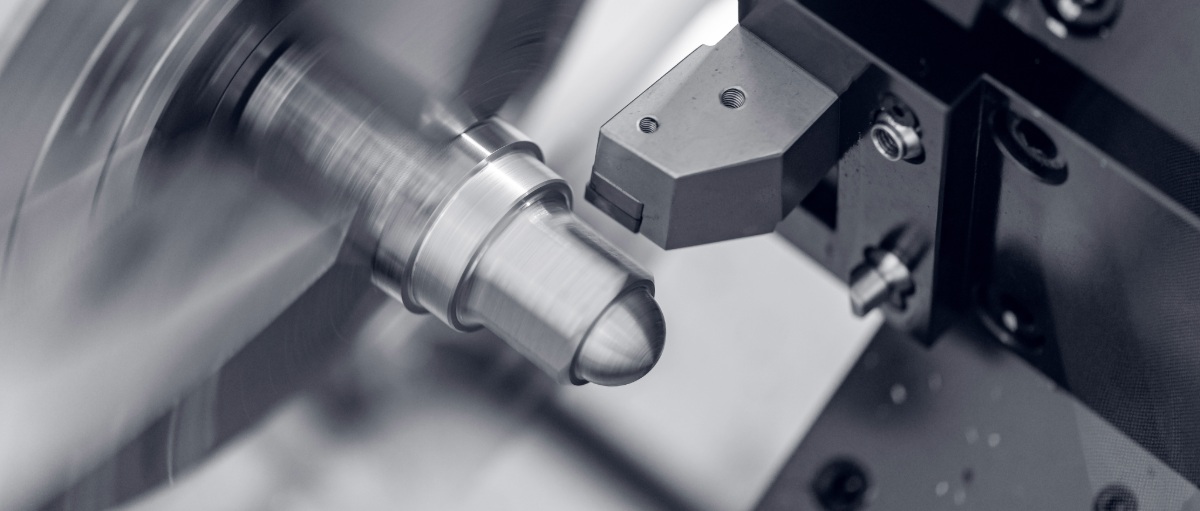
Production CNC turning in Buffalo, NY, supports repeat production for round parts where the critical turned geometry has to stay consistent from one part to the next.
Roberson Machine Company machines production CNC turned parts and replacement components for manufacturers that need dependable part-to-part results.
Learn More About
- Why CNC turning works for production parts
- Parts commonly made with CNC turning
- Production runs, repeat orders, and bulk work
- What happens from drawing to production
- Material considerations for turned components
- Machining methods used alongside turning
- Where turned production parts are used
- Common questions and FAQs about production CNC turning in Buffalo, NY
Need CNC turned parts for a production order, repeat run, or replacement component? Contact us online or call 573-646-3996 to discuss production CNC turning in Buffalo, NY, with Roberson Machine Company.

Why Manufacturers Use CNC Turning for Production Parts
CNC turning fits production work when a part relies on round geometry and repeatable turned features. The process helps manufacturers produce the same component again and again without changing the basic part requirements.
Repeatable turned geometry
Turning works best when the part’s main features are controlled by rotation, diameter, and concentric relationships.
- Outer diameters and shoulder features
- Bores, grooves, and fit surfaces
- Threaded details, chamfers, and related turned features
Efficient part-to-part production
CNC turning supports production efficiency when the part shape fits the process and the requirements are clear before the run begins. Once the setup is established, the same component can be machined repeatedly with consistent expectations.
Repeatable part results
CNC turning supports repeat production when each part needs to match the same requirements across the order. That matters when fit, replacement use, or assembly behavior depends on consistent turned geometry.
What Types of Parts Use Production CNC Turning in Buffalo, NY?
Common production CNC turned parts are usually round components used in assemblies where fit, motion, spacing, fastening, or fluid control matter. These parts often rely on cylindrical and rounded forms that need to hold shape and function across a production order.
- Production shafts and pin-style parts
- Spacers, bushings, and sleeves
- Adapters, collars, and couplings
- Studs, threaded parts, and fastener-style components
- Fluid-control parts, fittings, and valve components
- Replacement components made from a drawing, CAD file, sample, or part requirements
Roberson Machine Company has produced related components used in production and assembly work, including drive shafts, ink rollers, valve body components, and end-of-arm robot tooling parts.
Material choice, part geometry, order volume, and end use all affect which parts make sense for production CNC turning. These examples show how turned parts can fit into production assemblies, replacement needs, motion-related components, fastening points, and fluid-control applications.
How CNC Turning Supports Repeat Production Work in Buffalo, NY
Production CNC turning helps when the same turned part needs to be made across an initial run and future orders. After the requirements, material, and machining approach are established, repeat work can usually move through review more efficiently.
That becomes useful when future orders need to build from established part details instead of rebuilding the work from scratch.
- Repeat orders: When the same component comes back, prior part details can help support maintenance work, inventory needs, repairs, or future production runs.
- Part families: Related components may share material needs, turned features, similar part shapes, or fit requirements.
- Replacement components: Worn, obsolete, or hard-to-source round parts may need to match an existing assembly, sample part, or drawing.
- Broader production machining: A turned part may also require milled features, drilled holes, inspection steps, or additional machining. Precision CNC machining helps support the larger part requirement.
Bulk Production CNC Turning in Buffalo, NY, for Larger Part Runs
When a larger order involves repeat turned parts, CNC turning may fit into a broader bulk part production with CNC machining workflow. The goal is to establish a production path that supports the order now and helps future work return cleanly.
- Repeat part geometry: Turned diameters, bores, shoulders, grooves, threads, and mating surfaces can be produced consistently across a run.
- Predictable production planning: Repeat work is easier to manage when production quantities and part requirements are reviewed before the run starts.
- High-volume support: High-volume CNC machining planning can help connect the part requirements, material choice, setup approach, and inspection needs to the larger production goal.
- Related machining steps: When a turned component also needs flat, slotted, drilled, or milled features, CNC milling for high-volume production parts may be part of the production path.
For production CNC turning in Buffalo, NY, Roberson Machine Company can review quantity, timing, material, and feature requirements so the current order does not have to be rediscovered later.
How Do CNC Turned Parts Move From Drawing to Production?
Turning into production starts with the information that defines the part requirements, such as drawings, CAD files, samples, material selection, and how the component fits into the final assembly.
- Review the part requirements: The process begins by reviewing material, quantity, turned features, and any assembly fit requirements.
- Confirm the production approach: Some parts are primarily CNC turned, while others require milling, drilling, inspection, or additional machining steps.
- Machine and check the parts: Parts are produced and checked to confirm alignment with drawings, samples, or production requirements.
When a part returns for another order, clear requirements help make the process more consistent.
What Materials Work Best for CNC Turning in Buffalo, NY?
CNC turning can be used with many metals and plastics, but the right material depends on how the part needs to perform. Fit, wear, corrosion resistance, weight, cost, and production quantity can all affect the material choice.
- Aluminum: Common for turned parts that require low weight, strong machinability, and consistent production behavior. Roberson Machine Company also supports related aluminum CNC machining work.
- Stainless steel: Used in demanding environments where corrosion resistance and part longevity are important. Roberson Machine Company also supports related stainless steel machining.
- Carbon and alloy steels: Used when turned components need higher load capacity, durability, or wear resistance.
- Brass, bronze, and copper: Used in fittings, bushings, and electrical components where material behavior is important.
- Machined plastics: Plastics like Delrin, nylon, PEEK, and HDPE support turned parts that need low weight or specific material behavior.
Material choice impacts machining, wear, fit, and final performance of the component in its working environment. Roberson Machine Company can review the part requirements, material callout, production quantity, and related common materials used in CNC machining before machining.
What CNC Machining Processes Are Used Alongside Turning?
Many production turned parts require additional machining after the turning stage. Once round geometry is complete, the part may move into other CNC processes for added features or checks.
Turning first: Diameters, shoulders, grooves, bores, threads, and other round features.
Supporting operations: CNC milling for flats or pockets, Wire EDM for certain slots or profiles, and 5-axis machining or multi-axis machining when the part needs features reached from multiple directions.
Each part should follow a machining path that fits its requirements rather than being forced into a single method.
Industries That Rely on CNC Turned Parts in Buffalo, NY
Many industries use CNC turned parts for round components, tooling details, and replacement hardware that must stay consistent across production runs. The shared need is reliable fit in the final assembly.
Aerospace and automotive
Turned shafts, bushings, collars, spacers, tooling details, and support components may be used in assemblies where fit, motion, and repeatable production matter.
Medical and lab instrumentation
Instrumentation and medical parts may need tight control of turned geometry, material selection, and repeatability for small assemblies and device components.
Robotics and automation manufacturing
Automation work often depends on repeatable turned components for motion systems, fixtures, tooling, adapters, end-of-arm tooling, and parts that need to locate or move consistently.
Packaging and production equipment
Production packaging equipment uses turned components like rollers, shafts, spacers, and wear parts that need consistent fit and durability across cycles.
Oil and energy sector
Oil and energy systems depend on turned components used in pumps, valves, fittings, and replacement hardware for harsh operating environments.
Roberson Machine Company’s turning work is usually less about one named industry and more about the part requirement: round geometry, repeatable features, material fit, and a component that needs to perform inside a larger assembly.

Common FAQs About Production CNC Turning in Buffalo, NY
Customers usually want to know whether CNC turning fits the part, what information helps quoting, and how the process supports repeat work. These FAQs cover common questions about materials, part geometry, replacement components, bulk orders, and related machining steps.
How do you quote production CNC turned parts in Buffalo, NY?
Quotes usually start with a drawing, CAD file, or sample part. Material, quantity, fit requirements, and key turned features help shape the production approach.
Helpful quoting details include:
- Part drawings, CAD files, or sample parts
- Material type and material callout
- Critical dimensions and turned features
- Quantity per run and expected repeat demand
- Inspection, finishing, or documentation needs
Even without complete details, early review helps determine the right machining path and whether additional processes are needed.
When is CNC turning the right choice for a part?
Turning works best for parts that rely on round geometry and repeatable features such as:
- Cylindrical features like diameters, threads, bores, grooves, shoulders, and tapers
- Mechanical components: shafts, pins, bushings, sleeves, spacers, and collars
- Couplings, fittings, rollers, and replacement parts
The strongest fits are parts where round geometry controls how the component fits, moves, seals, or fastens inside an assembly.
What materials are used in CNC turning?
CNC turning can be used with many metals and plastics, including:
- Aluminum, stainless steel, carbon steel, and alloy steel
- Brass, bronze, copper, and other machinable metals
- Delrin, nylon, PEEK, HDPE, and other machinable plastics
Material choice is driven by fit, wear performance, corrosion resistance, weight, cost, production volume, and end-use conditions.
Can CNC turning handle bulk production and repeat orders?
CNC turning can handle bulk production, repeat orders, and replacement parts when the job is suited to repeatable geometry and defined production requirements.
For repeat orders, having prior part data helps future jobs move more smoothly through quoting, scheduling, and production.
What drives CNC turning requirements in Buffalo, NY?
Production CNC turning is driven by material, quantity, turned features, fit requirements, inspection expectations, and repeat order likelihood.
A drawing, CAD file, sample part, material specification, or assembly requirement helps define what needs to be machined and verified.
When is CNC turning not enough on its own?
Not all components can be completed through turning alone. Additional processes like milling, drilling, Wire EDM, or 5-axis machining may be needed depending on part features.
Roberson Machine Company can review part requirements and determine the machining steps needed based on geometry, material, quantity, and assembly needs.
Can CNC turning produce replacement parts?
Yes. It can be used to recreate round components when enough information exists to define geometry, material, and fit.
Replacement feasibility is typically based on drawings, CAD files, samples, and defined fit requirements.
What affects the cost of production CNC turning?
Cost is shaped by material, part design, production quantity, setup requirements, inspection, and whether additional machining operations are required.
The clearest way to evaluate cost is to review the part requirements, quantity, material, and any repeat-order expectations before machining begins.
CNC Turning Services in Buffalo, NY With Roberson Machine Company
We machine CNC turned components for customers who need repeatable geometry, dependable fit, and a practical route from part requirements to finished production work.
Turning for repeatable round features
We look at turned features that affect fit, including diameters, bores, shoulders, grooves, threads, and mating surfaces.
Support for production runs and recurring orders
Production turned parts often return as repeat orders, replacement work, inventory needs, or larger runs. We support components where consistency across orders matters over time.
Review from drawing, CAD file, sample, or part requirements
Provide drawings, CAD models, samples, and production requirements so we can evaluate the machining path and requirements.
Related machining capabilities include:
- Automated CNC Milling Machine
- Plastic Machining
- Laser Engraving
- Wire EDM Parts
- Lathe Machine
- Precision Stainless Steel Machining
- CNC Lathe Machining
- Custom CNC Machining for Part Production
- CNC Machine Automation
- Oil and Gas Precision Machining
Roberson Machine Company supports sourcing CNC turned parts where repeatable geometry, production planning, and consistency matter across orders. Learn more about how CNC turning can help your business, or contact us online to discuss production CNC turning in Buffalo, NY. You can also call 573-646-3996.