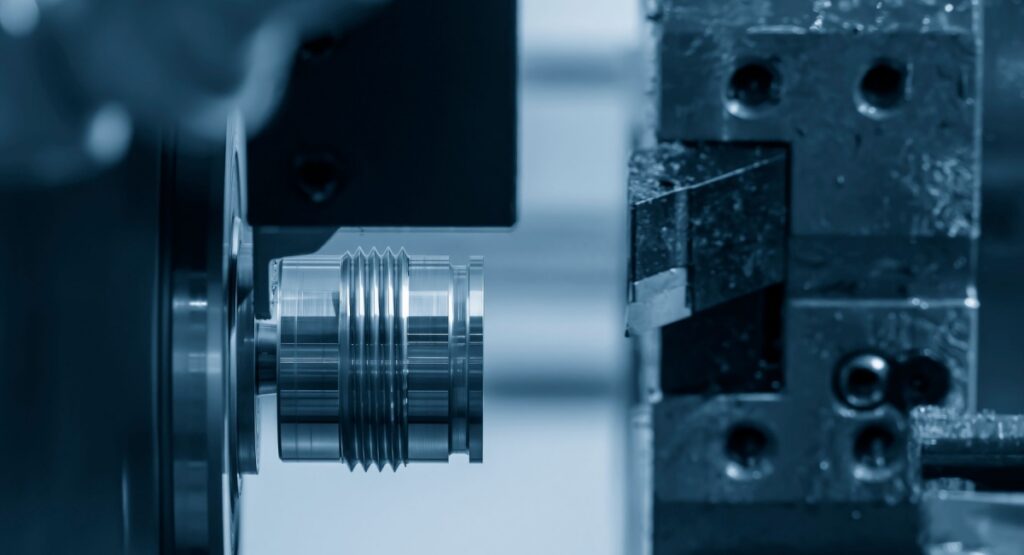
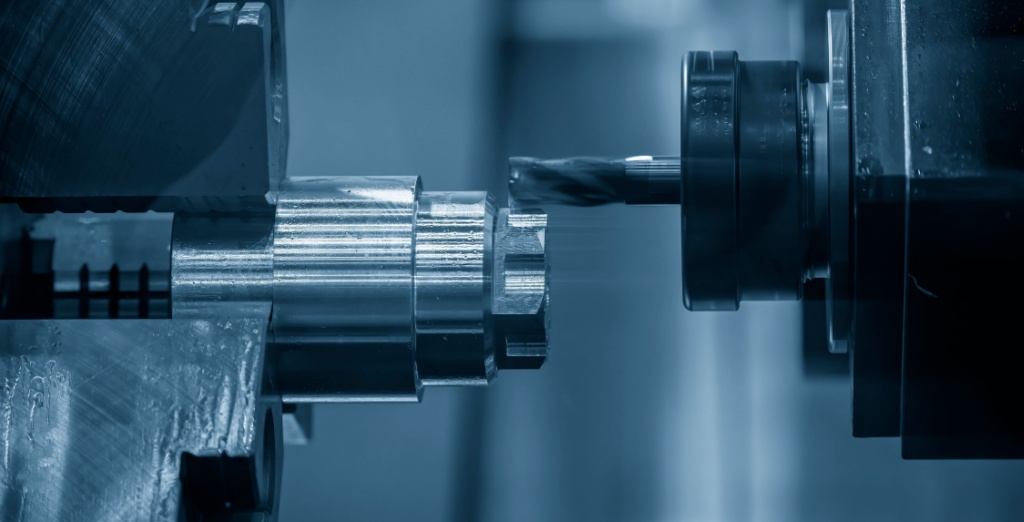
Lathe machines are used when the work depends on precise circular geometry, controlled diameters, and features that need to stay centered from one part to the next.
That usually makes the decision pretty simple. When a part has to spin, seal, fit, or repeat without losing alignment, a lathe machine often makes the most sense.
In this article:
- When a lathe machine is the obvious answer.
- How lathe machines support bulk CNC production.
- What common machining work belongs on a lathe.
- Answers to frequently asked questions about lathe machines.
- Why this work keeps coming back to lathes.
When a Lathe Machine Is the Obvious Answer
Deciding what precision CNC machining process to use gets easier when the part keeps pointing back to the same kind of geometry and the same kind of work.
A lathe machine tends to be the obvious answer when:
- The most important features are round, centered, or tied to a single axis.
- The part relies on diameters, bores, threads, or concentric relationships to function properly.
- The work needs a process that establishes those features early instead of recreating them later through extra setups.
- The same geometry has to make sense not just now, but on future runs too.
When those conditions line up, a lathe usually gives the machine shop a cleaner way to start the work.
How Lathe Machines Support Bulk CNC Production
Bulk CNC machining puts pressure on every weak part of a process. Once the same part has to repeat across longer runs, setup changes, cycle times, and extra handling stop being small annoyances and start affecting output.
In high-volume CNC machining and production, a lathe machine helps by producing the geometry that matters most early and keeping the same part moving without rebuilding the work every time. That matters most when the part depends on controlled diameters, bores, threads, and other round features that need to stay aligned as volume increases.
Why lathe work helps production runs stay consistent
In production work, consistency depends on building the process around the features that matter most. When a part relies on controlled diameters, centered bores, threads, shoulders, or related round features, a lathe gives the shop a better chance of keeping those details aligned from one piece to the next.
That matters even more as volume increases. The more often a part repeats, the more valuable it becomes to establish the critical geometry early, reduce unnecessary handling, and keep the work tied to a process built for round, centered features.
For the right part, lathe work does not make bulk production more complicated. It gives the production run a stronger starting point.
Why round features go bad faster at volume
Round features do not hide mistakes for long. In bulk production, if details like these start slipping, the same problem keeps repeating across the run:
- Diameters that have to fit cleanly
- Bores that need to stay centered
- Threads that have to repeat the same way
- Sealing surfaces that cannot wander
- Related round features that need to stay concentric
When the part depends on circular geometry, a lathe gives the shop a better chance of keeping those features controlled from one piece to the next.
Why repeat machinery parts are often a natural fit for lathe work
Many repeat machinery parts keep coming back to lathe work because the features that matter most do not really change: controlled diameters, centered bores, threads, smooth surfaces, and geometry that has to fit cleanly from one run to the next.
For machinery components ordered at volume, output depends on keeping those round features under control instead of overworking them through additional steps and setups.
A part that is lathe-friendly at higher volumes is usually easier to repeat, easier to keep aligned, and less likely to need the same geometry rebuilt through extra setups as production continues.
Common Machining Work That Belongs on a Lathe
In real production, lathe work usually shows up when a shop needs the same kind of round geometry to perform the same way without drifting, wearing oddly, or creating extra cleanup later. That can mean very different parts in very different industries, but the machining logic is often the same.
If rollers have to keep moving cleanly
This is common lathe work. Parts in this category often include:
- Rollers
- Sleeves
- Pulleys
- Cylindrical tooling components
Surface finish, diameter control, and concentricity all affect how these parts perform in motion. That is one reason ink rollers keep showing up in packaging and production lines and similar work tied to food and beverage machining.
If shafts and bushings have to fit the same way every time
A lathe is often the obvious place to start because those parts rely on alignment, controlled diameters, and clean fit within a larger assembly. That is part of why turned parts keep showing up in industrial automation and robotics, including drive shafts and certain end-of-arm robot tooling parts.
If sealing and flow depend on turned features
Valve bodies, instrument parts, and similar components often belong on a lathe because the geometry that matters most has to be established cleanly before the rest of the machining process takes over.
That includes work like this medical valve body, along with microscope components and acrylic instrument parts used in medical machining and similar flow-control work in energy and power generation.
If repeat machine parts have to match
This often includes parts like:
- Shafts and rotary hardware
- Bushings and spacers
- Sleeves and couplings
- Other replacement machine components with round critical features
Repeat machine-part work depends on keeping the same round features showing up the same way, whether the part is being ordered now, later, or as a replacement. That is one reason lathe work stays tied so closely to repeat industrial production across industries like aerospace, automotive, and military manufacturing.
FAQs About Lathe Machining
Most lathe machine questions are really about use. What kinds of work belong there, what the machine is actually doing, and when a lathe is the obvious answer instead of just one option among many. These FAQs get into those practical questions.
When does a lathe machine become the obvious answer?
The answer usually becomes obvious when the part depends on round geometry that has to stay controlled instead of being recreated through extra setups. If the work revolves around diameters, bores, threads, shoulders, or other features tied to a single axis, a lathe often makes more sense than trying to build the same geometry the hard way.
That gets even clearer when the same part has to come back later and still make sense in production without rethinking the whole process.
What kinds of shop-floor problems do lathe machines solve well?
Lathe machines solve problems where round features need to stay centered, parts need to fit or spin correctly, or repeated work starts exposing weak process choices. That can mean anything from rollers that need smooth surface contact to shafts that have to fit the same way every time to valve-style parts that depend on sealing surfaces and threads.
In other words, lathe machines tend to make the most sense when circular geometry is doing the real work.
What work should probably not stay on the lathe from start to finish?
A part may be a great lathe candidate and still need other machining before it is done. That usually happens when the lathe handles the key round geometry first, but the part still needs flats, slots, cross-holes, milled mounting surfaces, or internal profiles that depend on a different kind of access.
That does not make the lathe less important. It usually means the lathe is doing the work that matters most first and other processes are finishing what it should not be forced to do alone.
Why do repeat machine parts keep ending up on lathes?
Because repeat machine parts usually expose process weakness fast. If the same shafts, bushings, rollers, sleeves, or threaded components have to keep matching what is already in service, round features cannot wander very far before the problem shows up.
Lathe work keeps coming back into that conversation because it gives shops a cleaner way to hold those features where they belong without overworking the part through unnecessary setups.
Why This Work Keeps Coming Back to Lathes
By this point, the pattern is pretty clear. Lathe machines keep showing up when the work depends on round geometry that has to stay controlled, repeat cleanly, and make sense in real production.
- Critical round features get established early instead of being rebuilt later through extra setups.
- Repeat parts get easier to manage when the same diameters, bores, threads, and centered features have to keep showing up correctly.
- Parts that need to fit, spin, seal, or move have a cleaner path through machining without drifting out of spec.
At Roberson Machine Company, we machine lathe-produced parts for customers who need more than a one-time run. If you are evaluating a part for lathe machine work, contact our team or call 573-646-3996 to talk through fit, production requirements, and next steps.