

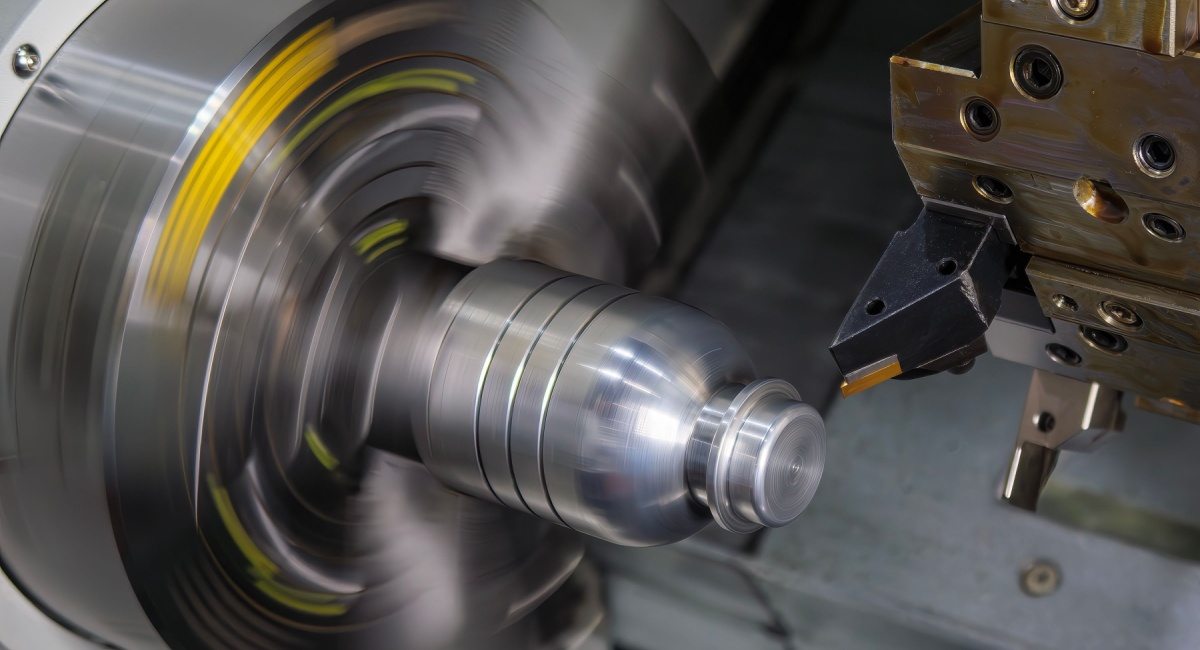
CNC Turning in Trenton, NJ, refers to a precision machining process for manufacturing cylindrical and rotational components with controlled geometry. At Roberson Machine Company, CNC turning is applied with a production mindset to support repeatable, release-ready parts.
Learn more about:
- How CNC turning supports parts built for production environments
- How CNC turning pairs with multi-axis machining processes
- Industries and applications that rely on turned features
- How to move forward with a CNC turning project
CNC turning supports a wide range of applications, from high-volume cylindrical components to parts that combine turning, drilling, and milled features in a single workflow, across medical, aerospace, automotive, automation, and industrial equipment manufacturing—including many everyday machinery components produced at scale. Our team supports short-, medium-, and long-run CNC turning programs across diverse materials and part geometries. To talk through your Trenton, NJ, CNC Turning project, contact us online or call 573-646-3996.
Table of Contents
- What CNC Turning Does Best in Production
- Industries That Rely on CNC Turning
- When CNC Turning Is the Right Method for Part Production
- CNC Turning & Precision Machining Capabilities
- Frequently Asked Questions | CNC Turning
- Why Choose Roberson Machine Company for CNC Turning in Trenton, NJ?
To learn more about Trenton, NJ, CNC turning, materials, and production workflows, you can explore our case studies, blog, FAQs, and customer reviews. These resources highlight how turned features and multi-axis machining work together across a range of real-world applications.
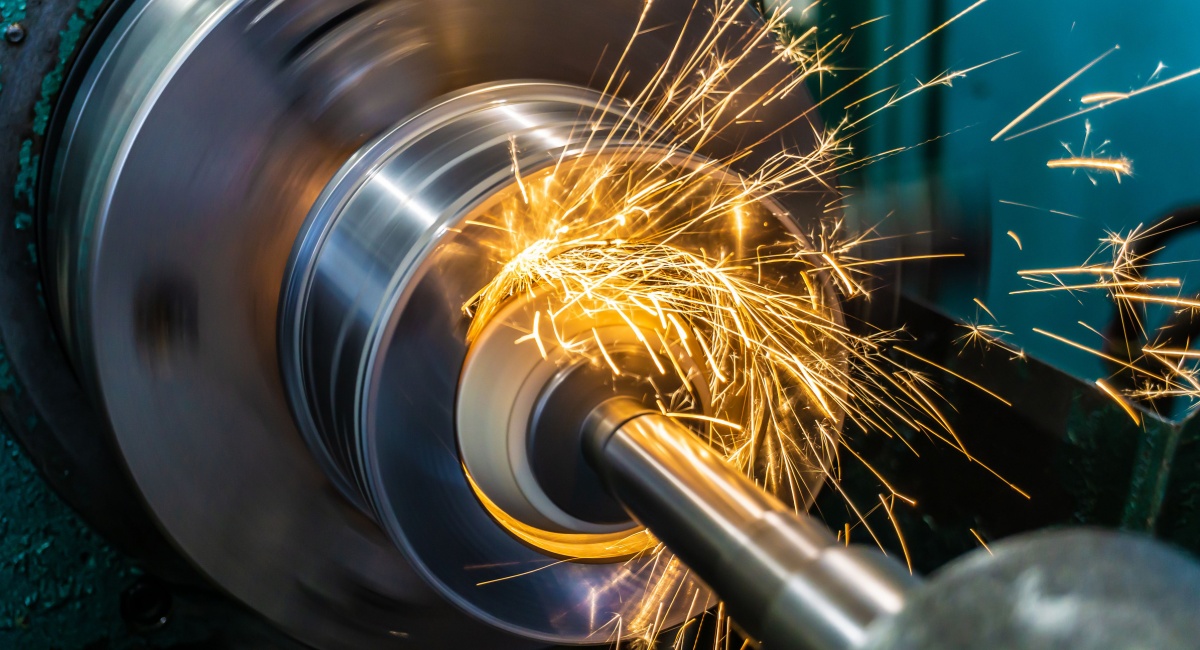
What CNC Turning in Trenton, NJ, Does Best in Production
CNC turning supports modern manufacturing by establishing accurate, repeatable geometry on components where round features, concentric relationships, and surface control matter most. In production environments, turning establishes the diameters, bores, threads, and functional surfaces that other operations rely on, often as part of integrated contract manufacturing workflows.
When applied correctly, CNC turning supports stable workflows across short runs, high-volume production, and repeat releases. At Roberson Machine Company, our role is to help scale output without introducing variation—using turning as the foundation that supports downstream milling, assembly, inspection, and quality control.
Establishing Critical Diameters & Concentric Geometry
CNC turning is commonly used to establish the core geometry that defines part function. Diameters, bores, shoulders, threads, and sealing surfaces are created relative to a single rotational centerline, allowing turning operations to control concentric geometry and reduce runout.
This approach is particularly important for parts and assemblies where geometry must remain aligned throughout production and use, including:
- Rotating features that require alignment throughout assembly
- Interfaces with bearings, seals, and mating components
- Components that require consistent centerlines across several operations
Anchoring features along a common axis enables Trenton, NJ, CNC turning experts to control stack-up errors and preserve critical alignment. That foundation enables downstream milling, cross-drilling, and secondary operations to add features while preserving fit and function.
Achieving Repeatability Across Volume & Release Cycles
In production machining work, repeatability, not accuracy alone, is what carries a successful first run into a dependable process. CNC turning supports repeatability by keeping key variables controlled and consistent from part to part, which becomes especially important when moving from initial runs into mass production.
Holding geometry to a consistent rotational centerline
By creating critical features from the same axis, CNC turning helps keep diameters, bores, threads, and sealing surfaces aligned across every part in a run. This becomes critical in real-world applications where components interface with bearings, seals, housings, or rotating assemblies as parts scale from prototype quantities into production volume.
Using stable workholding and repeatable setups
Consistent fixturing and workholding help reduce variation between parts and across runs. As long as setups stay unchanged across releases, CNC turning can hold dimensional stability even as production scales or schedules shift.
Applying the same tool paths, offsets, and cutting conditions
Using repeatable programming and controlled cutting parameters helps reduce variation tied to operator changes, setup drift, or gradual process changes as production scales. Issues like machine drift can build over extended runs if programs, offsets, or setups aren’t maintained consistently.
This level of repeatability helps manufacturers plan production with confidence and avoid rework when parts are released again months—or years—later. When applied with a production mindset, Trenton, NJ, CNC turning provides a reliable foundation for scaling output—whether parts are produced internally or as part of a broader contract manufacturing strategy.
Efficient Production of Cylindrical and Rotational Parts
CNC turning is designed specifically for efficient production of round and rotational parts. When a part’s function depends on diameters, bores, threads, and axial features, turning removes material in a continuous, controlled motion that minimizes cycle time, non-cutting time, and wasted tool movement.
In production environments where parts repeat, bar-fed stock, single-axis rotation, and one-setup machining allow CNC turning to maintain consistent geometry while reducing handling and re-clamping. These advantages closely align with production-driven CNC methods focused on throughput and process stability.
- Shafts, pins, and rotational hardware that support motion transfer and must hold consistent diameters across long production runs.
- Bushings, sleeves, and wear components where proper alignment and surface finish influence service life and fit.
- Rollers and cylindrical tooling used in continuous-duty equipment that cycles and replaces on a schedule.
- Turn–mill hybrid parts that blend rotational geometry with milled features finished in a single setup.
For these types of parts, Trenton, NJ, CNC turning delivers the balance of speed, accuracy, and process control needed to support both short production runs and long-term manufacturing programs.
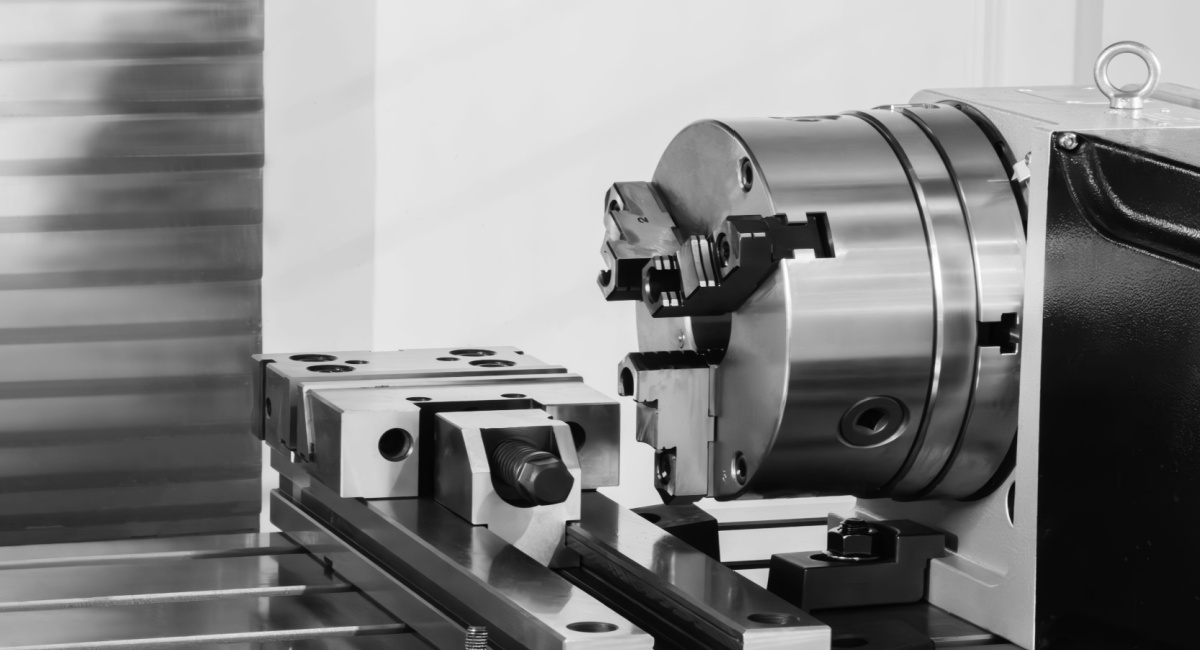
Industries in Trenton, NJ, That Rely on CNC Turning
CNC turning serves an essential role across industries in industries where controlled surface finishes and rotational geometry, paired with concentric features, drive performance, reliability, and service expectations.
Medical & Regulated Manufacturing
Across medical machining and manufacturing, CNC turning commonly produces the features that seal, align, or interface with other components. Small changes in diameters, bores, or surface finishes can affect fit, function, and inspection performance.
In medical applications, turned components appear in precision valve bodies, microscope and alignment assemblies, precision housings, and small-scale medical instrument parts where concentric geometry and surface control matter more than aggressive material removal.
Automotive production machining and EV manufacturing rely on CNC turning to produce high-volume components where diameters, threads, and concentric relationships must hold across thousands—or millions—of parts.
- Processes that must remain stable as production scales
- Features that repeatedly engage with bearings, seals, and mating components
- Geometry that needs to avoid drift between initial release and sustained production
In production work involving drive shaft components, this reality shows up when dimensional control must be maintained across extended runs and small geometric shifts ripple into assembly and performance issues.
Industrial Automation, Robotics & Production Equipment
Within industrial automation and robotics environments, turned components often run continuously, align with precision, and exhibit predictable wear. CNC turning supplies bushings, guides, rollers, and hybrid turn–mill parts that integrate directly into automated systems where downtime is expensive and replacement parts must install without adjustment.
This is especially true for assemblies like end-of-arm robotic tooling, where concentric geometry, mounting alignment, and repeatability directly affect positioning accuracy and cycle performance.
Aerospace & Defense
Stringent performance and verification requirements define aerospace machining and defense manufacturing, where CNC turning supports components with zero tolerance for geometric drift or process variation.
- Load & mechanical stress: Turned features are expected to maintain alignment and dimensional stability under sustained and cyclic loads.
- Vibration & dynamic forces: Rotational components need to resist runout and surface degradation that may amplify vibration during operation.
- Long service cycles: Geometry and finishes need to withstand extended service lifespans where wear, fatigue, and thermal exposure build over time.
- Process control & traceability: Turning operations must repeat consistently across validated releases and documented production runs.
Trenton, NJ, CNC turning delivers the control and process stability needed to meet these constraints over extended service lives.
Energy, Oil & Gas
Energy and oil & gas machining environments expose turned components to pressure, heat, wear, and corrosive service conditions. CNC turning supports parts where geometry, material behavior, and surface integrity are critical to service life.
- Pressure and fluid containment: Turned valve components and manifolds need to maintain concentric alignment and sealing performance across repeated pressure cycles, which are central considerations in what matters most in oil & gas CNC machining.
- Wear, heat, and material stress: Continuous exposure accelerates failure when geometry drifts or finishes degrade, which is why precision machining plays a role in reducing waste during long production cycles.
- Surface durability: Long-term performance can hinge on post-machining decisions such as surface treatments designed to improve resistance to corrosion, abrasion, and harsh operating conditions.
CNC turning offers the process control necessary to meet these demands without introducing variability across extended production runs, particularly where heat, pressure, and material behavior introduce additional operational and safety considerations.
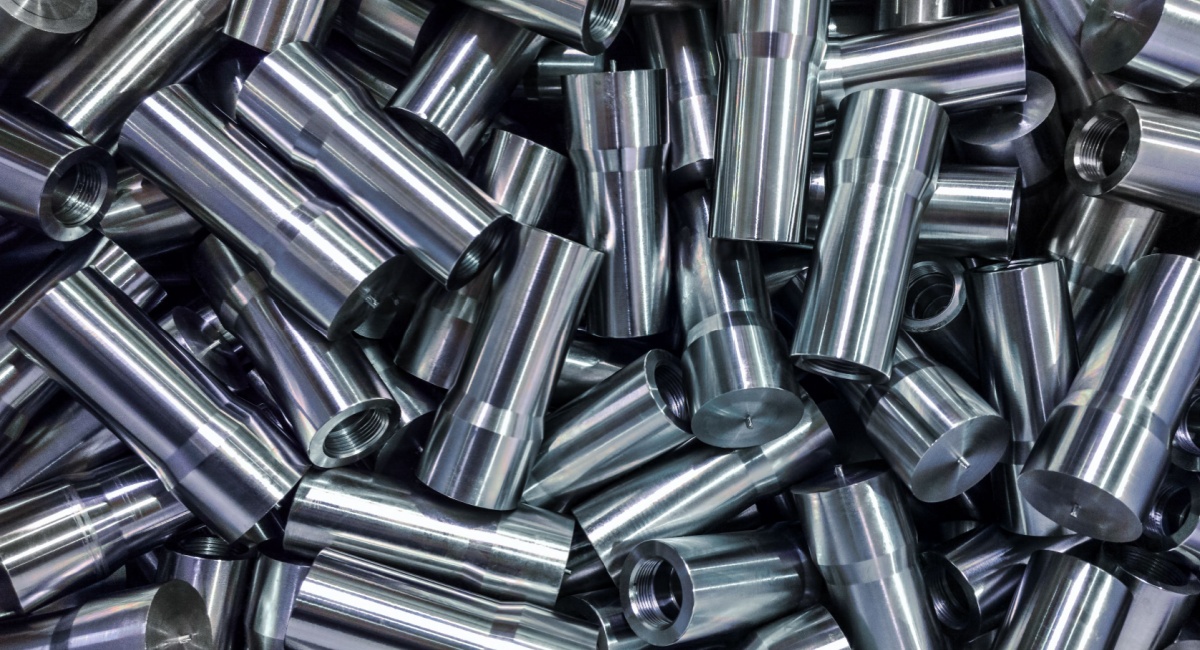
When CNC Turning Is the Right Method for Part Production
CNC turning in Trenton, NJ, is useful when a part’s function depends on rotational accuracy, concentric relationships, and controlled surface finishes.
From bushings and pins through rollers and turn–mill tooling equipment, turned components tend to require:
- Specific diameters, bores, rotational geometry, or axial features that define how components align, seal, or rotate.
- Features that must remain concentric to a shared centerline across multiple operations, assemblies, or service cycles.
- Surface finishes that affect part interaction with bearings, seals, fluids, or wear surfaces.
- Geometry that must remain consistent from first article through long production runs and future releases.
- Multiple features that benefit from single-setup completion to preserve alignment between turned and milled elements.
Production Use Cases for CNC Turning
These requirements appear consistently across different production environments. Common CNC turning parts include:
- Sealing, flow, and pressure-handling parts: Precision valve bodies, fluid-handling components, and turned features designed for applications where sealing performance matters.
- Alignment-critical components: Bushings, sleeves, housings, microscope parts, and sensor mounts that must align consistently during assembly.
- Motion-transfer and drive components: Shafts, pins, and rotary hardware produced at volume, including drive shaft components.
- Continuous-duty rollers and cylindrical tooling: High-cycle rollers and guides such as ink rollers applied in production and packaging equipment.
Turned parts are frequently part of broader component designs. Rotational features are commonly combined with milled flats, slots, or mounting interfaces, reinforcing CNC turning as a foundational step within multi-operation machining workflows.
CNC Turning & Precision Machining Capabilities
Many turned parts require additional machining operations to finish functional features, preserve alignment, or limit downstream handling. At Roberson Machine Company, CNC turning operates within a broader workflow designed for repeatability and release consistency.
In Trenton, NJ, CNC turning projects frequently rely on additional CNC machining capabilities to complete parts:
- CNC Milling — Non-rotational features such as flats, pockets, and slots added as secondary operations after turning.
- Precision CNC Machining — Applied for secondary features, dimensional refinement, and finishing after turning.
- Multi-Axis CNC Machining — Used to keep cross-holes and angled features aligned without additional setups.
- 5-Axis CNC Machining — Applied when parts need access from multiple orientations within one workflow.
- Wire EDM — For hardened materials or internal profiles that aren’t practical to machine conventionally.
- Prototyping & First-Article Production — For validating designs ahead of repeat or long-term production.
When multiple operations are involved in Trenton, NJ, CNC turning, the goal is simple: Complete the part efficiently, maintain alignment between features, and avoid unnecessary handoffs.
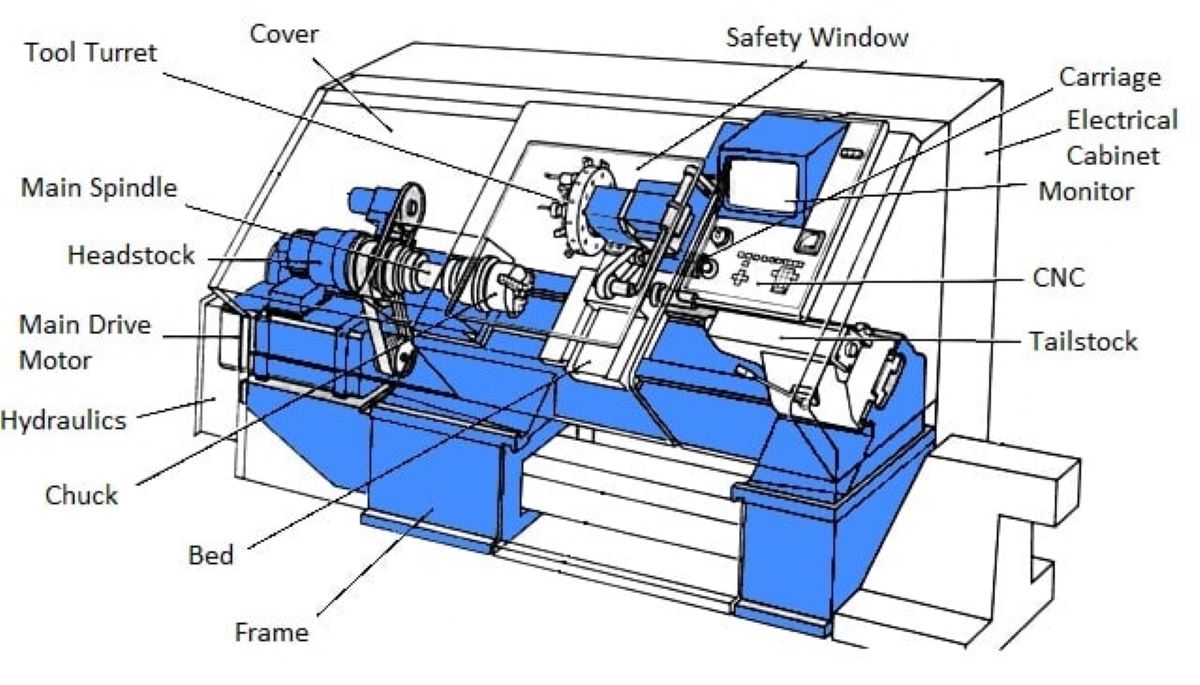
Lathe Machines vs. Turning Centers
CNC lathes and CNC turning centers handle turning operations, but they support different needs in production environments. This distinction isn’t about how the machines look or how old they are, but about capability, automation, and single-setup efficiency.
CNC Lathes
Operate on two primary axes (X and Z) and are well suited for basic turning work. Traditional CNC lathe machining is often chosen when parts require consistent diameters, faces, grooves, or threads without significant secondary operations.
CNC Turning Centers
Turning centers are built to combine turning with secondary operations through live tooling, extra axes, sub-spindles, and automation. CNC turning centers complete drilling, tapping, milling, and back-working in a single setup to limit handoffs and preserve feature alignment.
The right choice depends less on machine complexity and more on how efficiently a part can be completed from start to finish—an important consideration when choosing a CNC turning partner in Trenton, NJ, for production work.
Frequently Asked Questions | Part Production & CNC Turning in Trenton, NJ
In production environments, evaluating CNC turning usually comes down to questions of fit, scale, and long-term consistency. These FAQs address how turning supports real-world production requirements.
When does Trenton, NJ, CNC turning make sense for production parts?
CNC turning is typically the right choice when a part’s function depends on rotational accuracy, consistent diameters, or features that must stay aligned to a common centerline.
It works especially well for parts that repeat at scale, require consistent surface finishes, or form the geometric foundation for secondary machining operations.
What kinds of components are well suited for CNC turning?
In Trenton, NJ, CNC turning is commonly applied to production parts including:
- Shafts, pins, and rotational hardware
- Bushings, sleeves, and wear components
- Valve bodies, manifolds, and flow-control parts
- Rollers and cylindrical tooling for automated equipment
- Turn–mill components that combine rotational and milled features
These components are often responsible for alignment, sealing, or motion transfer within larger assemblies.
What details help generate an accurate CNC turning quote?
Clear and consistent quotes rely on understanding how the part will be produced and released over time. Helpful inputs include:
- Current drawings with tolerances and critical feature callouts
- Material specifications and finish requirements
- Expected quantities per release and annual volume
- Delivery cadence or production schedule
- Inspection, documentation, or packaging expectations
If some information is still developing, early discussion can help refine the manufacturing approach prior to final pricing.
What commonly affects pricing for CNC turned parts?
Cost is most often driven by how efficiently a part can be produced and repeated. Common drivers include:
- Setup complexity and number of required operations
- Tight tolerances or surface finish requirements across many features
- Material behavior, chip control, and tooling wear
- Cycle time impacted by milling, drilling, or back-working
- Release sizes that repeat setup effort too frequently
Early review of functional requirements often helps uncover ways to reduce cost without impacting performance.
How is part consistency maintained across long production runs?
Long-term consistency comes from disciplined process control, not just first-article qualification. That generally includes standardized workholding, documented tooling and offsets, in-process checks on critical features, and inspection routines tied to print requirements.
With a validated turning process in place, these controls help ensure parts remain consistent across future releases.
When is it beneficial to combine CNC turning in Trenton, NJ, with milling or secondary processes?
Production parts often rely on turning to define core geometry, with milling or other processes used to complete secondary features.
It works well when flats, slots, cross-holes, or interfaces need to stay aligned to turned features, or when completing parts in one workflow limits handling and setup variation.
At what stage should a machining partner be involved in a CNC turning project?
Bringing a machining partner in early allows more flexibility to optimize the process before cost, lead time, or repeatability issues are fixed.
- Material and stock selection
- Tolerance strategy on functional features
- Setup count and operation sequencing
- Whether parts can be completed in a single workflow
Even when prints aren’t final, those conversations usually prevent avoidable changes later.
Can CNC turning in Trenton, NJ, scale from low-volume runs into long-term production programs?
CNC turning often supports early production runs, bridge quantities, and long-term repeat programs.
The key factor isn’t volume—it’s whether tooling, workholding, and inspection plans support future releases. When planned correctly, the same turning process can scale without requiring a rebuild later.
How inspection supports Trenton, NJ, CNC turning for production parts?
Inspection confirms that the turning process is holding what matters, not just that parts pass once.
- Critical diameters, bores, and threads
- Relationships between concentric features
- Consistency across lots and releases
The intent is to build confidence in the process, not to inspect every feature on every piece.
How repeat releases compare to continuous production runs?
Time gaps between repeat releases place greater emphasis on process discipline than production speed.
- Documented setups and tooling
- Controlled offsets and tool life
- Clear inspection benchmarks
With those controls in place, production can restart months or years later without drifting from the original intent.
What separates production-ready Trenton, NJ, CNC turning from job-shop turning?
The difference isn’t the machine—it’s the mindset behind the process.
Production-ready turning prioritizes stability, documentation, and repeatability across releases rather than simply completing a single order. That approach carries through programming, workholding, inspection strategy, and scheduling discipline.
Why Choose Roberson Machine Company for Trenton, NJ, CNC Turning?
Roberson Machine Company delivers the process control, equipment, and production experience required for reliable, repeatable CNC turning. Stable workflows and tooling strategies allow us to support long-term production cycles while keeping releases on schedule.
Once CNC turning moves beyond prototypes and into repeat production, execution matters more than raw capability. Consistent parts and reliable programs depend on process control, setup discipline, and production experience. Our team at Roberson Machine Company specializes in:
- Turning workflows structured to preserve critical diameters, bores, and sealing features across repeat releases
- One-setup machining approaches that minimize handoffs, cycle time, and alignment risk
- Process control that holds parts consistent from first article through long-run production
- Broad material experience across stainless, aluminum, alloys, titanium, and production-grade polymers
- Scheduling discipline and tooling strategies designed to minimize scrap, delays, and downstream variation
Additional CNC services available through our shop include:
- Wire EDM Parts
- Lathe Machine
- Precision Stainless Steel Machining
- CNC Lathe Machining
- Custom CNC Machining for Part Production
- CNC Machine Automation
- Oil and Gas Precision Machining
- Aerospace Manufacturing
- Automotive Part Manufacturing
- EDM Machining
Supporting new releases, scaled production, and ongoing CNC turning programs is a core focus at Roberson Machine Company. To discuss your Trenton, NJ, CNC Turning needs, learn more about our team and capabilities, request a quote online, or call 573-646-3996.