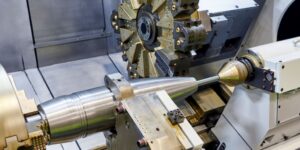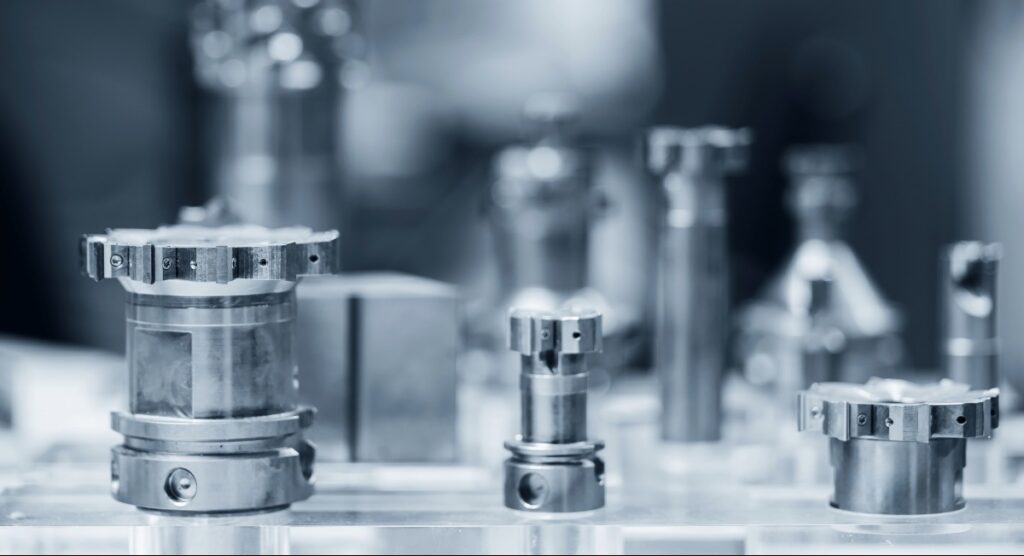
Material choice matters for CNC turned parts because the material has to support the geometry and the way the finished component will be used. A part that spins, seals, wears, conducts, resists corrosion, or comes back for future orders may need more thought than a simple spacer or one-time replacement component.
Before choosing a material, it helps to understand what CNC turning is and why the process is used for round, controlled features. From there, the best material is the one that fits the part’s job.
In this article, learn:
- How material choice changes a CNC turned part.
- Which metals are commonly used for CNC turned parts.
- When plastics are used for CNC turned parts.
- How materials are chosen for CNC turned parts in production.
- Answers to FAQs about materials for CNC turned parts.
Roberson Machine Company is here to help you choose the right material for CNC turned parts. Contact us online or call 573-646-3996 to discuss project requirements, quantities, and production needs.
How Material Choice Changes a CNC Turned Part
Choosing a material for CNC turned parts usually comes down to what the finished component has to survive, support, or do repeatedly. Cost matters, but it should not be the only reason a material gets selected.
Durability and wear
A turned part may need to hold up under load, motion, pressure, or repeated contact with another component. Material choice often matters most when the part will be used as:
- A shaft, roller, sleeve, or bushing
- A fitting, valve component, or mating part
- A wear part that will be replaced or reordered over time
Corrosion and environment
Moisture, chemicals, cleaning processes, heat, and outdoor exposure can all affect material choice. This is especially important when designing stainless components for corrosive and washdown environments.
- Washdown or cleaning chemicals
- Outdoor weather or moisture
- Harsh service conditions near heat, fluid, or debris
Weight and strength
Some turned parts need to stay light, while others need more strength, stiffness, or impact resistance. Aluminum, steel, stainless steel, and engineered plastics can all make sense in different situations, and the right call may depend on the same tradeoffs that show up when comparing aluminum and steel in precision manufacturing.
Machinability and finish
Material choice can affect tool wear, cycle time, surface finish, and how efficiently the part can be produced. For aluminum parts, the final application may also affect whether an anodized finish makes sense after machining.
Cost and availability
Material cost is not only about the price of the raw stock. The material can also affect machining time, tool wear, scrap risk, lead time, and whether the same material will be practical to source again later.
For production work, the material choice should make sense beyond the first order. A cheaper material may not save money if it slows machining, creates finish problems, or becomes hard to source when the part needs to be reordered.
- Raw material price and stock availability
- Machining time, tool wear, and finishing needs
- Consistency for repeat orders and future production runs
Material selection matters from planning through production. The right material helps the part machine cleanly, perform correctly, and stay practical for future orders.
What Metals Are Commonly Used for CNC Turned Parts?
Metals are commonly used for CNC turned parts when the finished component needs strength, wear resistance, corrosion resistance, conductivity, or lower weight. The best metal depends on the part’s job, not just the material name.
| CNC turning material | Why it may be used | Common turned part examples |
|---|---|---|
| Aluminum | Lower weight, good machinability, and practical production value. Grade selection can matter, especially when comparing options such as 6061 and 7075 aluminum. | Spacers, collars, housings, fittings, lightweight components |
| Stainless steel | Corrosion resistance, durability, and cleanability. Stainless steel is often considered when the part will face moisture, cleaning, or harsh service conditions, including corrosive and washdown environments. | Fittings, shafts, valve components, food-related parts, medical components |
| Carbon steel and alloy steel | Strength, wear resistance, and load capacity. Steel may be the right choice when the part needs to hold up under repeated use, and the difference between alloy steel and carbon steel can matter when strength, hardness, machinability, or cost are part of the decision. | Shafts, pins, sleeves, bushings, collars, machine components |
| Brass, bronze, and copper | Conductivity, corrosion resistance, bearing behavior, or a specific fit within an assembly. Brass does not rust the way iron or steel can, but it can still corrode depending on the environment. | Bushings, fittings, connectors, sleeves, specialty turned components |
Metal choice can also affect the larger production process. A material that works well for one replacement part or short run may not be the best choice when the same part needs to be machined consistently across future orders.
Are Plastics Used for CNC Turned Parts?
Some CNC turned parts are made from machinable plastics when the finished component needs low weight, low friction, electrical insulation, or chemical resistance instead of metal strength.
- Delrin
- Nylon
- PEEK
- HDPE
- Glass-filled nylon
Plastic materials can be useful for specific turned parts, but they are not a default substitute for metal. The material still has to fit the part’s durability needs, expected wear, operating conditions, and cost.
How Does Roberson Machine Company Choose Materials for CNC Turned Parts in Production?
For production work, material selection usually begins with the part requirements, not a generic material list. Roberson Machine Company needs to understand what the part does, what it fits with, how many are needed, and whether the same component may need to be ordered again later.
Useful information can include:
- Drawing, CAD file, or sample part
- Known material callout or acceptable substitute
- Quantity, timeline, and repeat-order expectations
- Wear, load, corrosion, temperature, or finish requirements
That information helps the material choice stay practical from quoting through production CNC turning instead of becoming a guess based on the material name alone.
FAQs About Materials for CNC Turned Parts
Material questions usually come down to how the finished part needs to perform, how practical it is to machine, and what the job needs from planning through production. These FAQs cover common materials, cost, timeline, and selection questions for CNC turned parts.
What materials are commonly used for CNC turned parts?
Common materials include aluminum, stainless steel, carbon steel, alloy steel, brass, bronze, copper, and some machinable plastics. Those categories cover many turned parts, including shafts, fittings, bushings, collars, sleeves, spacers, rollers, and replacement components.
The material should match the part’s job. A lightweight spacer, a corrosion-resistant fitting, and a wear component may all be turned parts, but they may need very different material decisions.
How does material choice affect the cost of CNC turned parts?
Material cost is only one part of the total cost. The chosen material can also affect machining time, tool wear, scrap risk, finishing needs, and how easily the same stock can be sourced again later.
- Raw stock price and availability
- Machining speed and tool wear
- Finishing, inspection, or repeat-order requirements
A cheaper material may not actually lower the job cost if it slows production or creates problems in the finished part.
Can material choice affect the timeline for CNC turned parts?
Material choice can affect timeline before machining starts. A common grade in a standard stock size may move quickly, while a specialty material may require extra sourcing time.
Timeline can also change if the material needs finishing, heat treatment, special inspection, or additional planning before production.
Is aluminum or stainless steel better for CNC turned parts?
Aluminum and stainless steel solve different problems. Aluminum is often useful when lower weight, machinability, and production value matter. Stainless steel is often selected when the part needs corrosion resistance, cleanability, or added durability in a tougher environment.
The better choice depends on what the part has to do, not which material sounds stronger on its own.
What information helps choose the right material for a CNC turned part?
The most useful information is anything that explains how the part needs to function and what it has to fit with after machining.
- Drawing, CAD file, or sample part
- Known material callout or preferred grade
- Quantity, repeat-order expectations, and timeline
- Wear, load, corrosion, temperature, or finishing requirements
Choose the Right Material for CNC Turned Parts
Material choice affects more than the finished part. It can change how the component machines, how it performs in use, and how practical it is to produce again later.
- The right material supports the part’s fit, movement, wear, and operating environment.
- Production planning gets easier when material availability, cost, and repeat-order needs are considered early.
- Parts are easier to quote and machine when our team understands the drawing, quantity, timeline, and material requirements up front.
At Roberson Machine Company, we help customers choose practical materials for CNC turned parts, replacement components, and production work. If you are evaluating a part for CNC turning, contact our team or call 573-646-3996 to talk through material options, production requirements, and next steps.