Image
Pages

CNC Turning Madison, WI

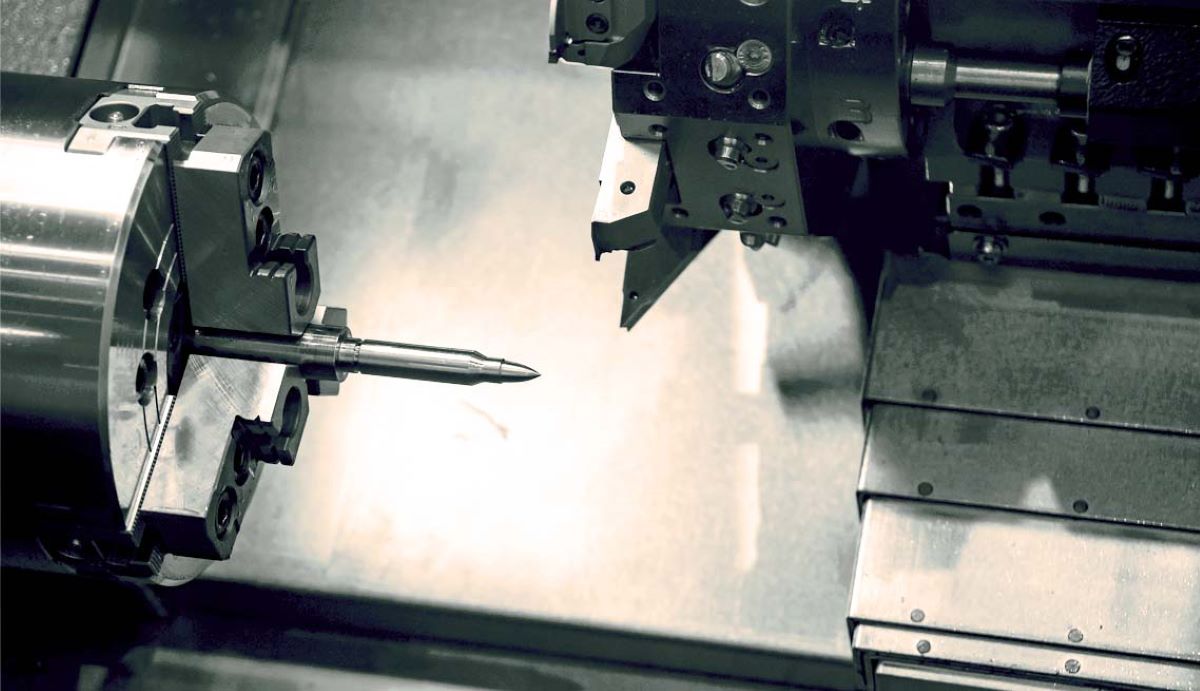
CNC Turning in Madison, WI, is a production machining process used to create cylindrical and rotational components with controlled geometry. At Roberson Machine Company, CNC turning supports production-ready parts built to repeat cleanly from first article through ongoing releases.

Learn more about:

  • How CNC turning supports components produced at scale
  • How CNC turning pairs with multi-axis machining processes
  • Applications that depend on rotational and turned features
  • How to initiate a CNC turning project with our team

From high-volume cylindrical components to parts that combine turning, drilling, and milled features in a single workflow, CNC turning supports applications across medical, aerospace, automotive, automation, and industrial equipment manufacturing—including many everyday machinery components produced at scale. We support CNC turning programs ranging from short runs to long-term production across varied materials and geometries. To move forward with your Madison, WI, CNC Turning project, contact us online or call 573-646-3996.


Table of Contents

To learn more about how Madison, WI, CNC turning fits into real production environments, explore our case studies, blog, FAQs, and customer reviews. These resources highlight how turned features and multi-axis machining work together across a range of real-world applications.


CNC Turning & Precision Part Production | Roberson Machine Company - Madison, WI, CNC Machining


What CNC Turning in Madison, WI, Does Best in Production

CNC turning serves a defined role in modern manufacturing by creating accurate, repeatable geometry on parts where round features, concentric relationships, and surface control are critical. In production environments, turning establishes the diameters, bores, threads, and functional surfaces that other operations rely on, often as part of integrated contract manufacturing workflows.

Applied properly, CNC turning enables stable workflows across short runs, high-volume production, and repeat releases. Our team at Roberson Machine Company helps scale output without introducing variation, using turning as the foundation for downstream milling, assembly, inspection, and quality control.


Establishing Critical Diameters & Concentric Geometry

CNC turning is especially effective at establishing the core geometry that defines part function. Because diameters, bores, shoulders, threads, and sealing surfaces are created from a single rotational centerline, turning operations can better control concentric geometry and reduce runout.

This approach is especially important for parts and assemblies where geometry must stay aligned throughout production and use, including:

  • Rotational features that must maintain alignment during assembly
  • Interfaces that connect with bearings, seals, and mating components
  • Parts that rely on consistent centerlines across multiple operations

By anchoring features to the same axis, Madison, WI, CNC turning experts minimize stack-up errors and keep critical relationships aligned. That foundation enables downstream milling, cross-drilling, and secondary operations to add features while preserving fit and function.


Achieving Repeatability Across Volume & Release Cycles

For production machining, repeatability matters more than accuracy alone when turning a successful first run into a reliable process. By keeping key variables controlled and consistent from part to part, CNC turning supports repeatability as processes move from initial runs into mass production.

Holding geometry to a consistent rotational centerline
By tying critical features to the same axis, CNC turning helps maintain alignment of diameters, bores, threads, and sealing surfaces across each part in a run. This becomes critical in real-world applications where components interface with bearings, seals, housings, or rotating assemblies as parts scale from prototype quantities into production volume.

Using stable workholding and repeatable setups
Consistent fixturing and workholding help reduce variation between parts and across runs. As long as setups stay unchanged across releases, CNC turning can hold dimensional stability even as production scales or schedules shift.

Applying the same tool paths, offsets, and cutting conditions
Repeatable programming and controlled cutting parameters reduce variation caused by operator changes, setup drift, or gradual process shifts as production scales. Issues like machine drift can build over extended runs if programs, offsets, or setups aren’t maintained consistently.

Built-in repeatability allows manufacturers to plan production with confidence and avoid rework when parts are released again months—or years—later. When applied with a production mindset, Madison, WI, CNC turning provides a reliable foundation for scaling output—whether parts are produced internally or as part of a broader contract manufacturing strategy.


Efficient Production of Cylindrical and Rotational Parts

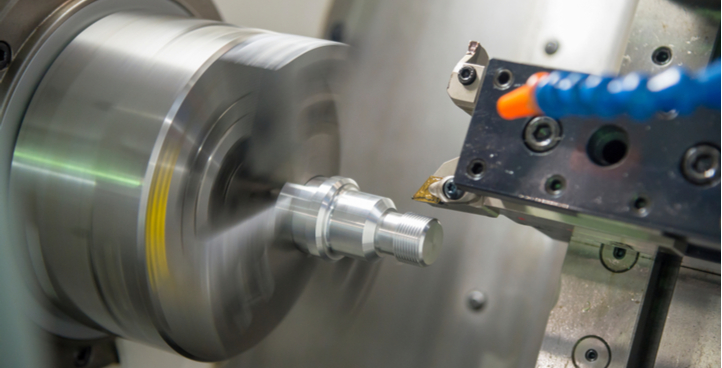
CNC turning is engineered for efficient production of round and rotational components. When part function is defined by diameters, bores, threads, and axial features, turning removes material through a continuous, controlled motion that minimizes cycle time, non-cutting time, and excess tool movement.

When production environments involve repeating parts, bar-fed stock, single-axis rotation, and one-setup machining allow CNC turning to preserve consistent geometry while limiting handling and re-clamping. These advantages closely align with production-driven CNC methods focused on throughput and process stability.

  • Shafts, pins, and rotational hardware used to transfer motion while maintaining consistent diameters across long runs.
  • Bushings, sleeves, and wear components where alignment and surface finish affect service life and fit.
  • Rollers and cylindrical tooling applied in continuous-duty equipment that cycles and requires scheduled replacement.
  • Turn–mill hybrid parts that combine rotational geometry with milled features completed in a single setup.

For parts like these, Madison, WI, CNC turning offers the balance of speed, accuracy, and process control needed to support both short runs and long-term manufacturing programs.


Industrial CNC Turning & Precision Part Production | Madison, WI, Precision CNC Turning & Tooling


Industries in Madison, WI, That Rely on CNC Turning

CNC turning plays a vital role across industries when rotational geometry and concentric features, along with controlled surface finishes, determine performance and long-term reliability.


Medical & Regulated Manufacturing

Throughout medical machining and manufacturing, CNC turning is typically responsible for features that seal, align, or interface with other components. Small changes in diameters, bores, or surface finishes can affect fit, function, and inspection performance.

CNC-turned components are used in precision valve bodies, microscope and alignment assemblies, precision housings, and small-scale medical instrument parts where concentric geometry and surface control outweigh raw material removal speed.


Automotive manufacturing and EV manufacturing rely on CNC turning to produce high-volume components where diameters, threads, and concentric relationships must hold across thousands—or millions—of parts.

  • Processes that need to stay stable as production scales
  • Features that interface over and over with bearings, seals, and mating parts
  • Geometry that should not drift between initial release and long-term production

This reality appears in production work involving drive shaft components that need to maintain dimensional control across extended runs, where small geometric shifts can cascade into assembly and performance issues across automotive production.


Industrial Automation, Robotics & Production Equipment

Across automated and robotic systems in industrial manufacturing, turned components are built to cycle continuously, align precisely, and wear in predictable ways. CNC turning produces bushings, guides, rollers, and hybrid turn–mill parts designed to integrate directly into automated systems where downtime is costly and replacement parts need to install without adjustment.

This is particularly true for assemblies such as end-of-arm robotic tooling, where concentric geometry, mounting alignment, and repeatability have a direct impact on positioning accuracy and cycle performance.


Aerospace & Defense

Strict performance and verification requirements define aerospace machining and defense manufacturing, where CNC turning supports components with zero tolerance for geometric drift or process variation.

  • Load & mechanical stress: Turned features must hold alignment and dimensional stability when subjected to sustained and cyclic loading.
  • Vibration & dynamic forces: Rotational components need to resist runout and surface degradation that may amplify vibration during operation.
  • Long service cycles: Geometry and finishes must hold up over extended lifespans where wear, fatigue, and thermal exposure accumulate.
  • Process control & traceability: Turning operations must execute consistently across validated releases and documented production runs.

Madison, WI, CNC turning offers the control and process stability required to meet these constraints throughout extended service lives.


Energy, Oil & Gas

In demanding energy and oil & gas machining environments, turned components must withstand pressure, heat, wear, and corrosive service conditions. CNC turning supports parts where geometry, material behavior, and surface integrity are critical to service life.

  • Pressure and fluid containment: Turned valve components and manifolds are required to maintain concentric alignment and sealing performance across repeated pressure cycles, factors that define what matters most in oil & gas CNC machining.
  • Wear, heat, and material stress: Continuous exposure can accelerate failure when geometry drifts or finishes degrade, underscoring why precision machining plays a role in reducing waste during long production cycles.
  • Surface durability: Long-term service performance frequently depends on post-machining decisions such as surface treatments that improve resistance to corrosion, abrasion, and harsh operating conditions.

CNC turning brings the process control needed to meet these demands without introducing variability across extended production runs, in environments where heat, pressure, and material behavior contribute to added operational and safety considerations.


CNC Turning & Precision Machining | Roberson Machine Company | Madison, WI, CNC Turning & Milling


When CNC Turning Is the Right Method for Part Production

CNC turning in Madison, WI, is the right approach when a part’s function relies on rotational accuracy, concentric relationships, and controlled surface finishes.

From bushings and pins through rollers and turn–mill tooling equipment, turned parts typically require:

  • Specific diameters, bores, rotational geometry, or axial features that define how components align, seal, or rotate.
  • Features required to remain concentric to a shared centerline through multiple operations, assemblies, or service cycles.
  • Surface finishes that directly affect how parts interact with bearings, seals, fluids, or wear surfaces.
  • Geometry that needs to hold consistency from first article through extended production runs and future releases.
  • Multiple features that benefit from being completed in a single setup to preserve alignment between turned and milled elements.

Production Use Cases for CNC Turning

Across different production environments, these requirements show up repeatedly. Common CNC turning parts include:

  • Sealing, flow, and pressure-handling parts: Precision valve bodies, fluid-handling components, and other turned features used where sealing performance matters.
  • Alignment-critical components: Bushings, sleeves, housings, microscope parts, and sensor mounts that must align consistently during assembly.
  • Motion-transfer and drive components: Shafts, pins, and rotary hardware made at production scale, including drive shaft components.
  • Continuous-duty rollers and cylindrical tooling: High-cycle rollers and guides such as ink rollers used in production and packaging equipment.

Turned parts rarely exist in isolation within production workflows. Rotational features are frequently paired with milled flats, slots, or mounting interfaces, positioning CNC turning as a foundational step within multi-operation machining workflows.


CNC Turning & Precision Machining Capabilities

Many turned parts require additional machining operations to complete functional features, maintain alignment, or reduce downstream handling. At Roberson Machine Company, CNC turning operates as part of a broader workflow structured for repeatability and release consistency.

Based on how the part is designed, Madison, WI, CNC turning often draws on a range of CNC machining capabilities:

  • CNC Milling — Non-rotational features like flats, pockets, and slots added after turning.
  • Precision CNC Machining — For secondary features, dimensional refinement, and finishing after turning.
  • Multi-Axis CNC Machining — To preserve alignment of cross-holes and angled features without additional setups.
  • 5-Axis CNC Machining — Applied when parts need access from multiple orientations within one workflow.
  • Wire EDM — For hardened materials or internal profiles that aren’t practical to machine conventionally.
  • Prototyping & First-Article Production — For validating designs ahead of repeat or long-term production.

When Madison, WI, CNC turning involves multiple operations, the goal is straightforward: Complete the part efficiently, maintain alignment between features, and avoid unnecessary handoffs.


CNC Turning Projects in Madison, WI | Manufacturing Lathe Machining vs. Turning Centers | Roberson Machine Company


Lathe Machines vs. Turning Centers

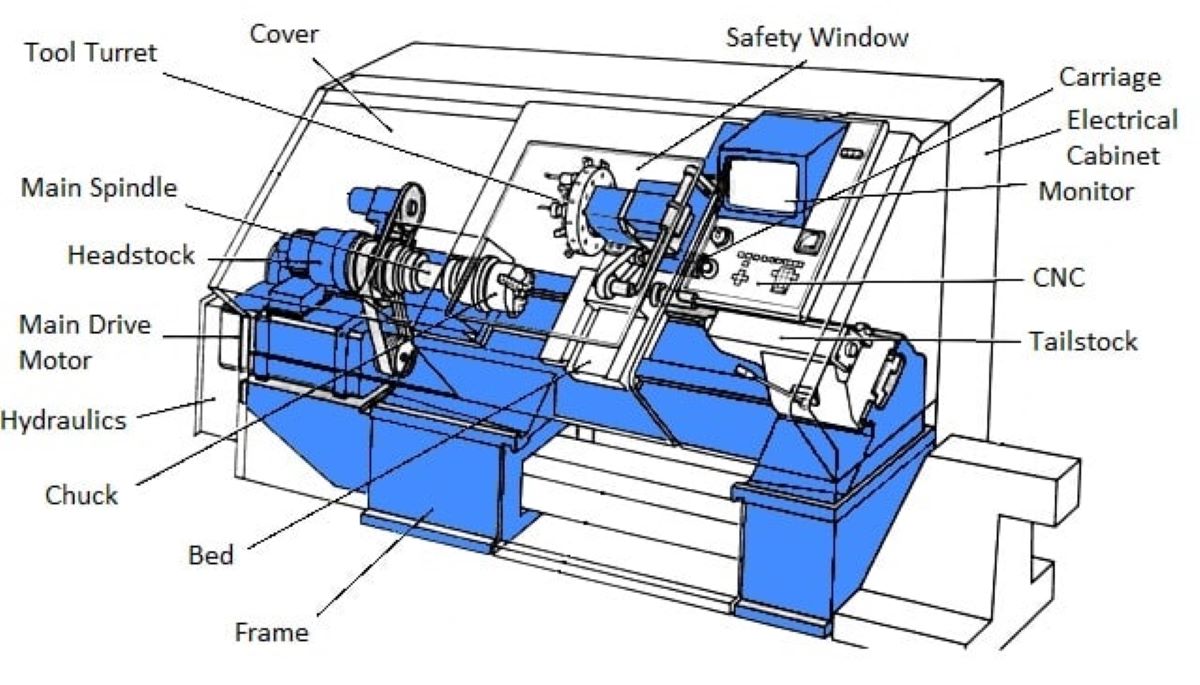
CNC lathes and CNC turning centers are both used for turning operations, yet they serve distinct roles in production environments. The difference isn’t about age or appearance—it comes down to capability, automation, and how much work can be completed in one setup.

CNC Lathes
Usually operate on two axes (X and Z) and are designed for straightforward turning tasks. Traditional CNC lathe machining is well suited for parts that need consistent diameters, faces, grooves, or threads without added secondary features.

CNC Turning Centers
Turning centers combine traditional turning with live tooling, extra axes, sub-spindles, and automated handling to complete more work in fewer steps. CNC turning centers can drill, tap, mill, and back-work parts in a single setup, helping preserve alignment between features.

The deciding factor is often less about machine complexity and more about how efficiently a part moves from start to finish—something to weigh when choosing a CNC turning partner in Madison, WI, for production work.


Frequently Asked Questions | Part Production & CNC Turning in Madison, WI

In production environments, evaluating CNC turning usually comes down to questions of fit, scale, and long-term consistency. These FAQs explain how turning supports production requirements in practice.

When does CNC turning in Madison, WI, become the right choice for production work?

CNC turning is best suited for parts whose function depends on rotational accuracy, consistent diameters, or features that must stay aligned to a common centerline.

It’s particularly well suited for parts that repeat at volume, require predictable surface finishes, or act as the geometric foundation for additional machining operations.

What types of production parts are commonly made with CNC turning?

CNC turning in Madison, WI, is often used to produce parts such as:

  • Shafts, pins, and rotational hardware
  • Bushings, sleeves, and wear components
  • Valve bodies, manifolds, and flow-control parts
  • Rollers and cylindrical tooling for automated equipment
  • Turn–mill components that combine rotational and milled features

These parts often serve critical alignment, sealing, or motion-transfer roles within larger assemblies.

What details are most important when requesting a CNC turning quote?

The most accurate quotes come from understanding how a part will be produced and released over time. Helpful inputs include:

  • Current drawings with tolerances and critical feature callouts
  • Material specifications and finish requirements
  • Expected quantities per release and annual volume
  • Delivery cadence or production schedule
  • Inspection, documentation, or packaging expectations

If all details aren’t finalized yet, early discussion can help refine the manufacturing approach ahead of pricing.

What commonly affects pricing for CNC turned parts?

Cost is most often driven by how efficiently a part can be produced and repeated. Common drivers include:

  • Setup complexity and number of required operations
  • Tight tolerances or surface finish requirements across many features
  • Material behavior, chip control, and tooling wear
  • Cycle time impacted by milling, drilling, or back-working
  • Release sizes that repeat setup effort too frequently

Evaluating functional requirements early often exposes ways to lower cost without affecting performance.

How is part consistency maintained across long production runs?

Consistency comes from controlling the process, not just qualifying the first run. That usually includes standardized workholding, documented tooling and offsets, in-process checks on critical features, and inspection routines tied directly to print requirements.

After a turning process is validated, those controls maintain consistency across future releases, including runs scheduled months or years later.

In what situations should CNC turning in Madison, WI, be combined with milling or other operations?

Many production components start with turning for core geometry and then use milling or other processes for additional features.

This workflow works well when milled features need to stay aligned to turned geometry, or when combining operations helps minimize handling and setup variation.

At what stage should a machining partner be involved in a CNC turning project?

Earlier involvement creates more room to optimize the process before cost, lead time, or repeatability issues get locked in.

  • Material and stock selection
  • Tolerance strategy on functional features
  • Setup count and operation sequencing
  • Whether parts can be completed in a single workflow

Early discussion, even before prints are final, usually helps prevent avoidable changes later.

Can Madison, WI, CNC turning handle both short-run and long-term production programs?

CNC turning is regularly used for early production, bridge quantities, and long-term repeat programs.

The key factor isn’t volume—it’s whether tooling, workholding, and inspection plans support future releases. When set up correctly, the same turning process can scale without major changes later.

What part does inspection play in Madison, WI, CNC turning for repeat production?

Inspection confirms that the turning process is holding what matters, not just that parts pass once.

  • Critical diameters, bores, and threads
  • Relationships between concentric features
  • Consistency across lots and releases

The goal is reliable process control and stability, not exhaustive inspection of every feature.

How are repeat releases different from continuous production runs?

Because repeat releases include time gaps, process discipline becomes more important than raw speed.

  • Documented setups and tooling
  • Controlled offsets and tool life
  • Clear inspection benchmarks

Such controls make it possible to resume production months or years later without drifting from the original intent.

What sets production-ready Madison, WI, CNC turning apart from job-shop turning?

The separation comes down to mindset, not the machine itself.

Production-ready turning focuses on stability, documentation, and repeatability across releases, not just completing a single order. That approach shows up in programming, workholding, inspection strategy, and scheduling discipline.

Why Choose Roberson Machine Company for Madison, WI, CNC Turning?

Roberson Machine Company delivers the process control, equipment, and production experience required for reliable, repeatable CNC turning. We help maintain long-term production cycles with stable workflows and tooling strategies that keep releases on schedule.

As CNC turning shifts from prototype work into repeat production, execution matters more than raw capability. Process control, disciplined setups, and production experience are what keep parts consistent and programs on track. Roberson Machine Company focuses on:

  • Turning workflows built to protect critical diameters, bores, and sealing features across repeat releases
  • One-setup machining strategies that reduce handoffs, cycle time, and alignment risk
  • Process control that holds parts consistent from first article through long-run production
  • Material experience across stainless, aluminum, alloys, titanium, and production-grade polymers
  • Scheduling discipline supported by tooling strategies designed to minimize scrap, delays, and downstream variation

Additional CNC capabilities we offer include:

New releases, scaled production, and ongoing CNC turning programs are supported by Roberson Machine Company with a focus on consistency and long-term reliability. To get started, learn more about our team and capabilities, request a quote online, or call 573-646-3996 to discuss your Madison, WI, CNC Turning goals and production needs.

🔝 Back to TOC

Contact Form

    Exceptional Customer Care & Precise Accuracy

    Get Down to Brass Tacks

    Competitively priced with vast capabilities and extreme precision, we have what you need. To get the personalized care of a craft shop and the capabilities of a high-volume plant, contact us today.

    Get a Free Quote

    View Service Areas

    Featured Blogs

    !Schema