

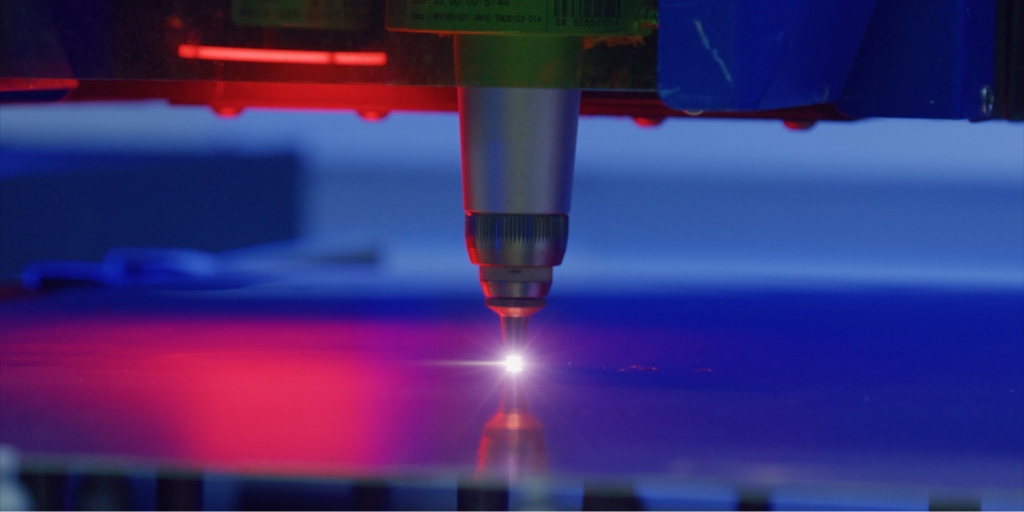
Laser engraving in Norfolk, VA, provides permanent part identification for serial numbers, SKUs, logos, part numbers, and other information that must remain legible throughout service.
Roberson Machine Company coordinates fiber laser engraving with the machining workflow to deliver finished components with their required marks already applied. The integrated approach limits outside handoffs, ties marking details to the component specifications, and streamlines the path from machining to delivery.
Learn More About
- Where engraving fits within CNC production
- What information can be engraved on CNC parts
- Material options used for laser-engraved parts
- Production marking using the Epilog G2 Galvo Fiber Laser
- Parts and industries that use fiber laser engraving
- Repeat production and ongoing orders with permanent marking
- FAQs about fiber laser engraving
When permanent identification needs to be included in the CNC production process, contact us online or call 573-646-3996 to talk with Roberson Machine Company about laser engraving in Norfolk, VA.
How Is Laser Engraving Incorporated Into CNC Production?
Laser engraving commonly occurs near the end of the CNC production process, after machining and at the appropriate stage among finishing, inspection, and delivery requirements. However, the engraving requirements should be established much earlier so the mark’s content, location, orientation, and appearance remain tied to the part throughout production.
Typical precision CNC machining production may involve:
- Reviewing the drawing, material, and production requirements
- Determining the machining sequence and necessary workholding
- Manufacturing the component through the planned machining process
- Applying any specified finishing operations
- Laser engraving the required mark
- Performing final inspection before the parts are released
With machining and fiber laser engraving in Norfolk, VA, handled through the same production workflow, Roberson Machine Company keeps the required mark tied to the part rather than leaving another vendor to interpret it later. This streamlined approach reduces delays and coordination while keeping the mark aligned with the production requirements.
Why a Separate Engraving Step Creates More Work
When engraving is completed by a separate vendor, the parts must move through an additional handoff before the order is finished and ready to ship.
Separate Post-Machining Engraving
- Additional logistics after machining
- A second supplier to coordinate
- Marking requirements handed off outside the machining process
- One more transition to confirm before the order is complete
- More opportunities for delays or mismatched requirements
Machining and Engraving Together
- Machining and engraving completed within the same workflow
- Engraving specifications remain connected to the part
- A single inspection and release process
- Finished and marked parts ready for delivery
Keeping machining and engraving in a single workflow reduces supplier handoffs and allows the finished parts to arrive with the required identification already applied.
What Can Laser Engraving Add to CNC Parts?
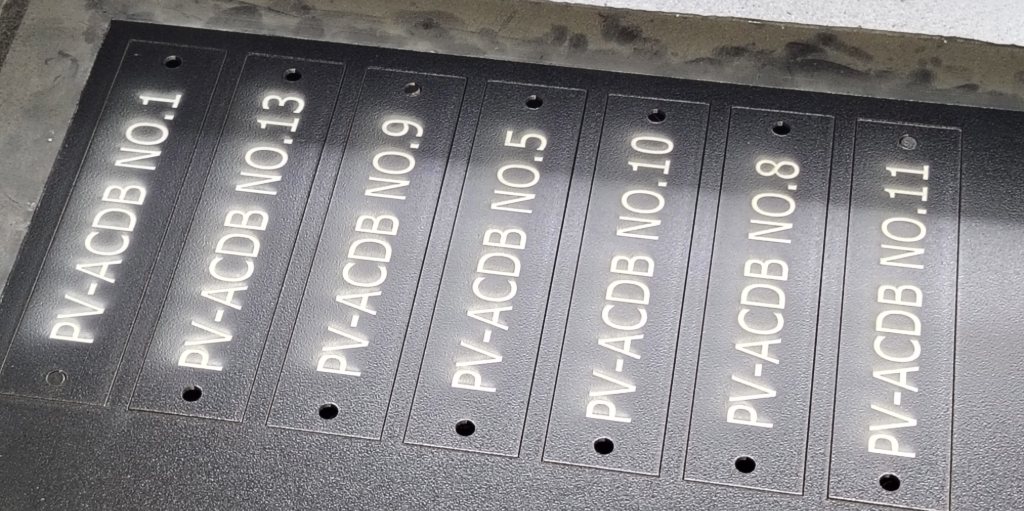
Through laser engraving, part identification, traceability details, branding, and operating information become a permanent part of the machined component.
Laser-marked machined parts remain easier to connect with their documentation, assembly requirements, and intended location within a larger system.
Depending on the application, engraved markings may include:
- Part numbers and SKUs for linking components to the assemblies or inventory records they belong to.
- Serial numbers that provide unique identification for parts, assemblies, or production groups.
- Lot, batch, and date codes used to support production traceability and quality review.
- Barcodes and QR codes for supporting scanning, recordkeeping, and part tracking.
- Logos and brand marks that remain with the component throughout its service life.
- Assembly and orientation marks used to show how a component fits or faces within a larger system.
- Measurement, warning, or operating information kept readable throughout the part’s service life.
Available space, surface condition, and component geometry all affect where a readable mark belongs.
What Materials Can Be Fiber Laser Engraved in Norfolk, VA?
Laser engraving works across many materials used in CNC production, but the final mark depends on the material, surface finish, part geometry, and required contrast. Planning for those factors early helps the finished engraving meet the expectations for the completed component.
Aluminum
Laser engraving works well with many machined aluminum components that require durable, readable identification.
The appearance of the engraved mark changes between bare, anodized, painted, and powder-coated aluminum. Those surface conditions help determine how the engraving process is applied and what the finished mark will look like.
Stainless Steel
Laser engraving is frequently added to stainless steel components that require lasting identification through handling, cleaning, and extended use. The ability to support durable identification complements the wider benefits of choosing stainless steel for challenging environments.
Carbon and Tool Steels
Machined steel components may be engraved after machining, before final finishing, or later in production depending on the required result. Because tool steel grades vary in hardness, wear resistance, toughness, and heat-treatment requirements, the material and production sequence should be considered together.
The mark must be timed carefully because later operations may obscure early engraving, while a late engraving step may complicate handling.
Brass and Copper Alloys
Permanent marks may be applied to brass, copper, and other machinable alloys through fiber laser engraving in Norfolk, VA, with the final appearance influenced by the alloy and surface condition.
The expected contrast, color, depth, and finished appearance should be agreed upon before production when the engraving will remain exposed on the completed part.
Other Production Metals
Titanium and other compatible production metals may also be laser engraved when the material, finish, and marking requirements suit the fiber-laser process.
The effect of 1064 nm infrared energy differs across alloys, making it important to consider mark readability, depth, appearance, and the timing of related finishing operations. For fiber laser engraving in Norfolk, VA, matching the settings and marking approach to the specific material supports a cleaner, more consistent result.
Machinable Plastics
Some grades of ABS, PVC, polycarbonate, and polypropylene respond well enough to produce clear engraving on machined plastic parts. Material behavior varies widely when plastics are exposed to concentrated laser energy and heat.
Certain resins may discolor, melt, distort, or produce weak contrast depending on the material, color, additives, and finish. Before engraving requirements are finalized, material compatibility should be evaluated to balance readability with surface integrity.
The finished depth, contrast, and appearance of a laser mark depend heavily on the material. A suitable marking approach reflects the component and its service demands along with the larger material-selection decisions behind it.
Our Fiber Laser Engraving Equipment
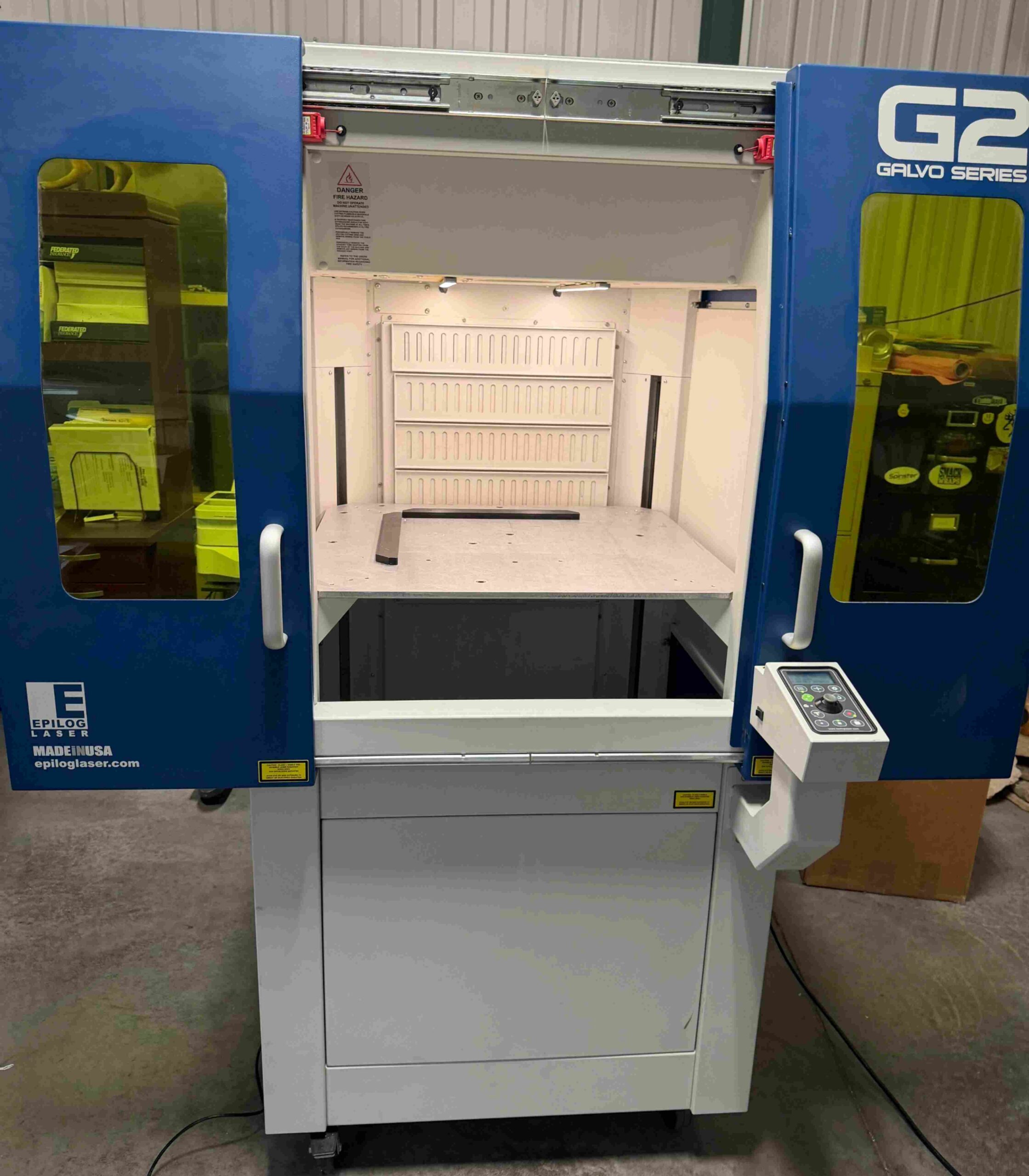
Epilog G2 Galvo Fiber Laser | View Product Details
Roberson Machine Company relies on a 60-watt Epilog G2 Galvo fiber laser for production-focused engraving and industrial part marking. Using 1064 nm infrared light, the machine creates permanent, high-contrast marks on metals, hard plastics, coated materials, and other manufacturing substrates compatible with fiber-laser engraving.
This is not a trophy or desktop engraving system. The machine’s power, adjustable work fields, and fiber-laser setup support production volumes, deeper marks, and repeat engraving for CNC-machined components.
| Machine | Epilog G2 Galvo Fiber Laser |
|---|---|
| Laser Output | 60 watts |
| Wavelength | 1064 nm infrared |
| Marking System | Three-axis galvanometer |
| Selectable Work Fields | 4″ × 4″, 16″ × 16″, and 24″ × 24″ |
Adjustable Work Fields for Different Parts
With selectable work fields measuring 4″ × 4″, 16″ × 16″, and 24″ × 24″, the Epilog G2 supports a range of part sizes and marking requirements. The engraving area can be configured around the component instead of relying on a single fixed field.
Built for Production Engraving
Designed for industrial marking rather than decorative trophy work, the 60-watt fiber laser supports production-volume identification, deeper engraving, and repeatable results across part orders.
The most efficient workflow keeps machining and engraving together, allowing Roberson Machine Company to produce the parts and add SKUs, serial information, logos, or other required identification before delivery.
Why Is Laser Engraving Used in Norfolk, VA?
Manufactured components often receive laser engraving when their identification must withstand production, assembly, installation, cleaning, maintenance, and extended service.
What Types of Parts Need Laser Engraving?
- Production manifolds and valve bodies
- Protective covers, housings, and enclosures
- Mounting components, brackets, and plates
- Production pins, shafts, rollers, and bushings
- Production fixtures, inspection gauges, and tooling
- Control-system hardware and panels
- Medical components including microscope parts and acrylic instrument components
- Tooling for robotics and industrial automation
- Service, repair, and replacement parts
- Customer-facing branded components
What Machining Processes Prepare Parts for Norfolk, VA, Laser Engraving?
Engraving typically follows machining and inspection. The CNC process used depends on the part geometry, feature requirements, and accessibility of the selected marking area.
- CNC milling: Builds the primary component geometry while creating flat, angled, or contoured surfaces, pockets, and mounting features.
- CNC turning: Machines rotational parts with accessible engraving surfaces such as end faces, shoulders, flanges, and outer diameters.
- 5-axis machining: Produces complex geometry and angled surfaces that require engraving access to be planned around the component’s finished orientation.
- Wire EDM: Produces precision profiles, inserts, tooling details, and hardened conductive components that may require permanent identification after machining.
Which Industries Use Laser-Engraved Components?
Across Roberson Machine Company’s industrial machining capabilities, engraved marks support the identification, assembly, inspection, and maintenance needs associated with varied parts and working environments.
| Industry | Common Components | How Engraving Supports the Application |
|---|---|---|
| Aerospace | Precision parts, production fixtures, and tooling | Supports identification that connects aerospace parts and tooling to relevant production and service records |
| Medical | Medical instruments, device parts, and specialized tooling | Provides durable identification for components exposed to cleaning, handling, and repeated use |
| Automotive and EV | Vehicle components, tooling, and fixtures | Helps maintain part tracking and assembly orientation throughout repeat automotive production |
| Packaging | Packaging equipment components, replacement parts, and changeover tooling | Helps operators identify setup positions, orientation, and maintenance requirements during changeovers |
| Automation and Robotics | Automation tooling, motion components, panels, and control-system hardware | Identifies ports, tooling positions, motion components, and service points within automated systems |
| Oil and Energy | Valves, pump parts, fittings, and replacement components | Keeps equipment and component identification readable through maintenance, handling, and demanding service |
Fiber Laser Engraving for Production Runs and Repeat Orders
Roberson Machine Company can incorporate Norfolk, VA, fiber laser engraving into repeat manufacturing so identification remains consistent from the first production release through future orders.
Within a broader bulk CNC production strategy, engraving details can be documented with the machining, inspection, and release requirements instead of rebuilt for every returning order.
Documenting Engraving for Repeat Production Runs
- Defined marking location: The established engraving location can remain consistent across future releases and repeat orders.
- Documented formatting: Customer formatting requirements can stay tied to the part specifications for ongoing production.
- Coordinated production records: Documented marking details remain part of the same production plan as machining and inspection.
- Repeat-order readiness: Carrying the engraving specifications forward reduces setup work when the same order returns.
Ongoing production planning can address quantities, release schedules, materials, and marking specifications together.
Answers to Fiber Laser Engraving Questions in Norfolk, VA
Customers often ask how fiber laser engraving is priced, when marking occurs during production, which materials respond well, and whether engraving changes the part itself. This section covers those concerns along with timing, dimensional requirements, and engraving for replacement parts.
What factors determine fiber laser engraving cost?
Fiber laser engraving cost depends on the part, the mark, and how much setup is required before production begins. The main pricing factors include:
- Component material and existing surface condition
- Total order quantity
- The overall mark size and design complexity
- How the selected marking area is positioned on the part
- Whether dedicated fixtures are needed to position the part
- Multiple engraved areas or surfaces
- Whether the engraving is part of a broader CNC production order
Simple engraving on an easily reached surface typically costs less to set up than work involving complex parts, specialized positioning, or several marking locations.
How quickly can laser engraving in Norfolk, VA, be completed?
The production schedule depends on order volume, marking content, layout requirements, and whether each component receives the same engraving or unique information. The schedule also accounts for setup, fixturing, part handling, and inspection.
When engraving is included with CNC machining, its timing is coordinated with finishing, inspection, and release requirements. Although engraving may require limited machine time, the overall schedule reflects every step needed to complete and release the parts.
How permanent is fiber laser engraving?
Fiber laser engraving creates a permanent mark by altering the surface of the component rather than applying ink, a sticker, or an attached label. The mark is intended to remain readable through normal handling, assembly, maintenance, and service.
Long-term readability still depends on the material, engraving depth, surface finish, operating environment, and location of the mark. Visibility may decline if the marked area experiences abrasion, additional machining, refinishing, corrosion, or significant surface damage.
Which CNC materials are compatible with laser engraving?
Many common CNC production materials are compatible with Norfolk, VA fiber laser engraving, including:
- Aluminum, including many anodized components
- Many stainless steel grades
- Carbon steel, tool steel, and related alloys
- Brass and other compatible alloys
- Selected production-grade machinable plastics
- Compatible painted surfaces, coatings, and post-machining finishes
Fiber laser engraving produces different visual and physical results across materials, coatings, and finishes. Material grade, coating, finish, additives, and required readability should be considered before the engraving approach is finalized.
Will laser engraving in Norfolk, VA, alter the finished part?
The marking location is normally selected so laser engraving does not change the component’s dimensions, geometry, or assembly fit. The marking location should be evaluated carefully when it is near:
- Sealing surfaces
- Interlocking or mating areas
- Critical dimensional features
- Delicate thin-walled features
- Visible cosmetic surfaces
- Areas exposed to repeated wear or contact
Marking depth, location, and orientation should be established before production so the engraving remains clear without interfering with the part’s function or appearance.
Can Roberson Machine Company recreate an existing engraved mark?
Replacement-part engraving is often possible when the original wording, format, size, direction, and location are known. A drawing, CAD model, engraved sample, clear image, or earlier production record may provide the details needed to define the new mark.
The original method, lettering style, material, finish, coating, and age of the reference part all influence how closely the new engraving can match. Recreating the necessary identification is generally easier than duplicating every cosmetic detail of an aged mark.
Choose Roberson Machine Company for Norfolk, VA, Laser Engraving
Roberson Machine Company combines CNC machining and laser engraving so components can move through marking and inspection before final release.
- Marking integrated with machining and inspection requirements
- Engraving specifications documented for repeat orders
- Laser engraving for initial components and full production releases
Customers can also coordinate laser engraving with related services such as:
- Wire EDM Parts
- Lathe Machine
- Precision Stainless Steel Machining
- CNC Lathe Machining
- Custom CNC Machining for Part Production
- CNC Machine Automation
- Oil and Gas Precision Machining
- Aerospace Manufacturing
- Automotive Part Manufacturing
To review your Norfolk, VA, laser engraving and CNC machining needs, request a quote online or contact Roberson Machine Company at 573-646-3996.