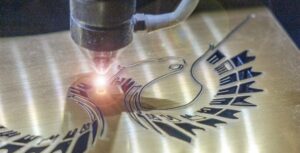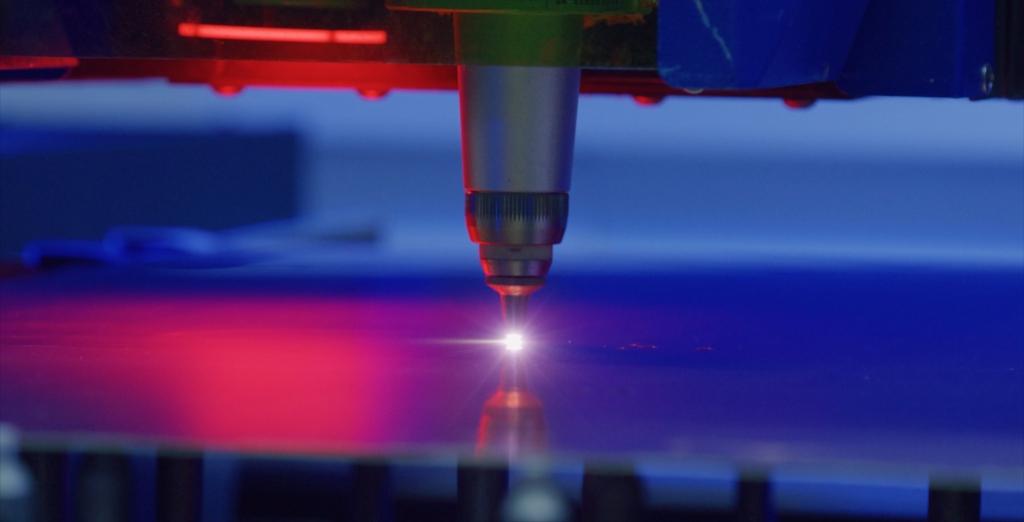
Machined parts do not always look different enough to tell apart at a glance. Components may share the same size, shape, and finish while differing in material, revision, assembly, or production run.
Without permanent identification, the wrong component may reach assembly, revisions may get mixed together, and parts may become disconnected from inventory, inspection, or quality documentation.
Those mistakes lead to wasted time, rework, and production delays. Laser engraving helps prevent them by permanently marking components with part numbers, serial numbers, lot codes, orientation marks, and other identifying information.
In this article:
- Why similar machined parts need permanent identification
- Why manufacturers choose laser engraving over labels and temporary markings
- Which materials can be laser engraved
- Which industries rely on permanent part identification
- Answers to FAQs about laser engraving
Roberson Machine Company incorporates permanent laser engraving into coordinated CNC production workflows. Contact us online or call 573-646-3996 to discuss your project and identification requirements.
Why Similar Machined Parts Need Permanent Identification
Permanent identification keeps each component connected to the information needed to produce, inspect, assemble, maintain, or reorder it. That connection becomes especially important when parts look alike, move between departments, or exist in multiple materials or revisions.
Without permanent identification, manufacturers may encounter:
- Similar-looking parts being mistaken for one another, especially across revisions, materials, or assemblies.
- Production delays and rework when incorrect components reach inspection or assembly.
- Broken traceability when parts become separated from drawings, inspection records, lot data, or other production documentation.
- Slower maintenance and replacement when technicians must determine which component they are servicing or reordering.
- Reliance on temporary labels or packaging that may be removed, damaged, or misplaced during production, shipping, or use.
Permanent identification keeps components connected to the information needed throughout manufacturing, inspection, assembly, maintenance, and future replacement.
Why Part Identification Matters More in Larger Production Runs
Identification becomes more important as part quantities increase. Larger production runs may move through multiple machines, inspections, containers, shifts, finishing steps, and assembly areas before the order is complete.
At that scale, one mixed revision or incorrectly identified batch may create confusion involving:
- Multiple containers of visually similar parts
- Separate production runs completed days or weeks apart
- Parts divided between inventory, assembly, and outside finishing
- Repeat orders that need to match earlier components
- Lots tied to different materials, inspections, or customer requirements
As production becomes more complex, permanent identification helps preserve traceability while reducing reliance on packaging, paperwork, or container location to distinguish similar parts.
Why Manufacturers Choose Laser Engraving Instead of Labels or Temporary Markings
Manufacturers use labels, hang tags, packaging, paperwork, and handwritten markings throughout the production process. Those methods all serve a purpose, but they do not necessarily stay connected to the component after it changes containers, moves between departments, or enters service.
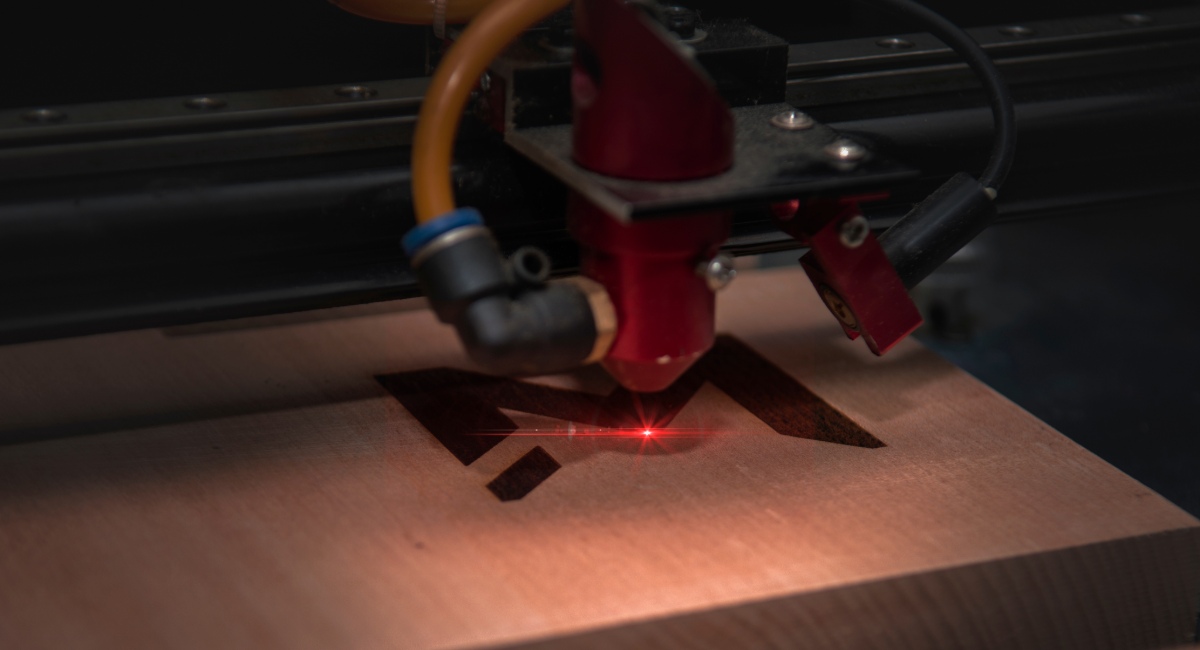
Laser engraving places identifying information directly on the part itself. Instead of depending on external labels or packaging, the component carries its own identification wherever it goes.
Permanent Marks Stay With the Part
Labels, packaging, handwritten notes, and storage containers all help organize parts during production. The problem is that none of them necessarily stay with the component.
A machined part may pass through inspection, outside finishing, assembly, storage, and shipping before it reaches the equipment or facility where it will be used. It may later move between plants, return for maintenance, or sit in inventory until a replacement is needed. At any point, packaging may change and paperwork may become separated from the physical component.
When identifying information remains with the component, manufacturers spend less time confirming part identity and reconnecting physical parts to the records that describe them.
Permanent Identification Supports Traceability
Depending on the application, laser engraving may add:
- Part numbers and customer part numbers
- Serial numbers and lot codes
- Revision levels and engineering changes
- Manufacturing dates and inspection identifiers
- Orientation marks and assembly references
- QR codes, Data Matrix codes, and other machine-readable identifiers
Those permanent markings connect physical components to the production, inspection, inventory, and maintenance records used to identify, track, and service them.
With a permanent reference on the part, manufacturers can investigate quality concerns, separate production lots, identify replacement components, and reproduce the same part months or years later.
Temporary labels, packaging, and paperwork continue to support manufacturing, shipping, and inventory management. Permanent laser engraving complements those tools by keeping critical identifying information with the component itself.
Which Materials Can Be Laser Engraved?
Fiber laser engraving supports many of the metals and engineering plastics commonly used in CNC production. The appearance of the finished mark depends on the material, surface finish, and application, so engraving parameters are selected to match the component and its identification requirements.
Common laser engraving materials include:
- Aluminum
- Stainless steel
- Carbon steel and tool steel
- Brass and copper alloys
- Titanium and other production alloys
- Engineering plastics
Different materials respond differently to laser energy, producing variations in contrast, depth, and appearance. The engraving process should be matched to the material, the finished part, and the identification requirements of the application.
Industries That Rely on Permanent Part Identification
Many manufacturing industries rely on permanent part identification to support traceability, quality control, assembly, maintenance, and replacement. The specific information engraved varies by application, but the goal remains the same: keeping each component connected to the information needed throughout production and its service life.
Aerospace
Serial numbers, tooling identification, and permanent part markings connect components to inspection records, maintenance history, and production documentation.
Medical
Instruments, device components, and specialized tooling retain readable identification through repeated handling, cleaning, and long service lives.
Automotive and EV
Part numbers, revision marks, orientation indicators, and lot information help distinguish repeat-production components and support assembly accuracy.
Packaging
Permanent markings identify replacement parts, changeover tooling, setup positions, and maintenance requirements across production equipment.
Automation and Robotics
Robotic tooling, control panels, fixtures, and motion-system components remain easier to identify during installation, maintenance, and future servicing.
Oil and Energy
Valves, fittings, pump components, and replacement parts retain permanent identification throughout demanding operating and maintenance environments.
FAQs About Laser Engraving
Manufacturers often ask about engraving cost, production timing, material compatibility, dimensional impact, and how permanent part marking fits into CNC production. These FAQs address some of the most common practical questions.
How much does laser engraving cost?
Laser engraving cost depends on the part being marked, the amount of information being engraved, production quantity, and any setup or fixturing required before marking begins. Pricing is commonly influenced by:
- Material and surface finish
- Order quantity
- Mark size and layout complexity
- Variable data such as unique serial numbers
- Part geometry and fixturing requirements
- Whether engraving is included as part of a larger CNC machining project
Simple identification marks on production parts generally require less setup than complex layouts or components requiring multiple engraving locations.
Does laser engraving affect the dimensions of a machined part?
Laser engraving creates permanent surface markings without affecting the functional dimensions of most machined components. The engraving process is selected to produce durable, readable identification while preserving the part’s intended performance.
The appropriate laser settings vary with the material, the required mark, and the application’s readability requirements.
Which materials can be laser engraved?
Fiber laser engraving works with many commonly machined metals and alloys, including:
- Stainless steel
- Aluminum
- Carbon steel
- Brass and copper
- Titanium
The engraving process is adjusted for each material to produce the required contrast, readability, and appearance.
Can laser engraving include QR codes or Data Matrix codes?
Laser engraving supports both human-readable and machine-readable identification. Common examples include:
- QR codes
- Data Matrix codes
- Serial numbers
- Part numbers
- Asset identifiers
- Lot and batch codes
The marking format depends on how the component will be tracked, inspected, or maintained after production.
When is laser engraving performed during production?
The timing depends on the manufacturing process and the finished part requirements. Laser engraving is commonly scheduled after machining and before final inspection, assembly, or shipping so the permanent identification is already in place when the component moves to the next production stage.
The exact sequence varies based on the material, finishing operations, inspection requirements, and overall production workflow.
How long does production laser engraving take?
Production time depends on the number of parts, the amount of information being engraved, whether every component receives the same mark or unique data, and any setup or fixturing required before production begins.
When engraving is coordinated with CNC machining, the marking process is incorporated into the overall production schedule rather than treated as a separate manufacturing step.
Work With Roberson Machine Company for Permanent Part Identification
Telling similar parts apart starts with permanent identification that stays with the component throughout production, inspection, assembly, maintenance, and future replacement.
- Review the material, surface finish, and marking requirements before production begins.
- Determine the part numbers, serial numbers, lot codes, or other information that should be permanently engraved.
- Coordinate laser engraving with CNC machining and production requirements to support long-term identification and traceability.
If you are planning permanent part identification for machined components, contact our team or call 573-646-3996 to discuss your material, marking requirements, and production goals.