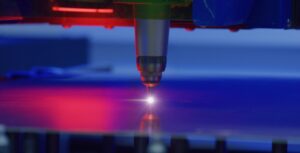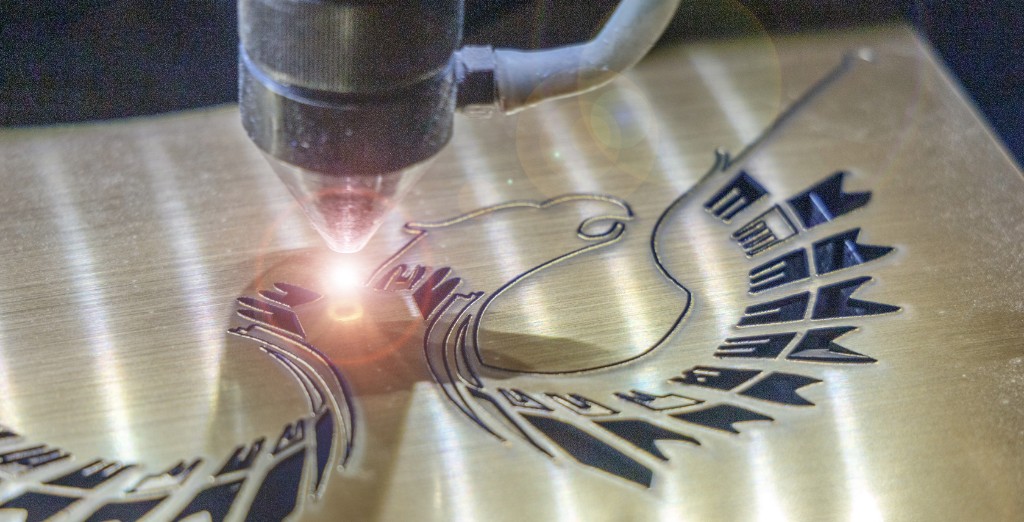
Permanent part identification delivers the most value when it is planned within the overall CNC manufacturing process rather than treated as a separate operation after machining is complete.
By integrating laser engraving into production, manufacturers reduce unnecessary handling, outside processing, scheduling delays, and the risk of separating parts from their permanent identification.
In this article:
- How laser engraving fits into CNC production.
- What determines when laser engraving happens.
- Why manufacturers integrate laser engraving into production.
- The benefits of fiber laser engraving for CNC parts.
- Which CNC manufacturing services work with integrated laser engraving.
- Answers to FAQs about laser engraving in CNC production.
Roberson Machine Company coordinates laser engraving with precision CNC machining, inspection, and other production operations so permanent identification is added at the right stage of manufacturing. Contact our team or call 573-646-3996 to discuss your production requirements.
Laser Engraving as a CNC Production Step
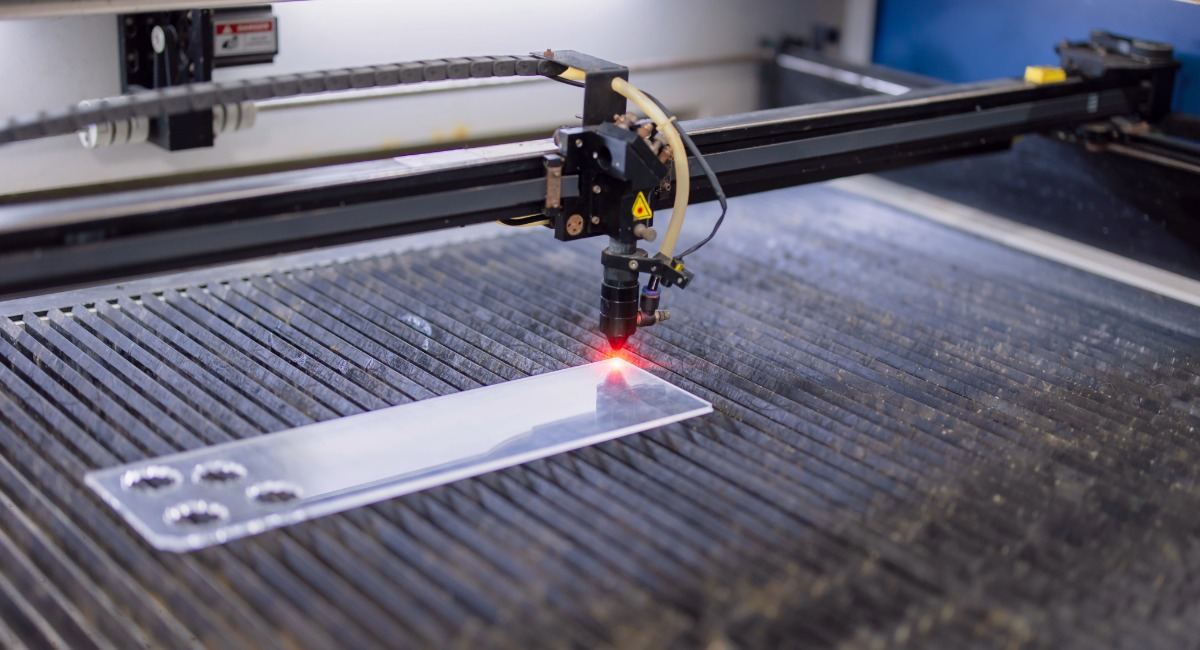
Laser engraving works best when it is planned as another production operation rather than added after machining is complete. Integrating engraving into the manufacturing process keeps permanent part identification aligned with inspection, finishing, assembly, and delivery requirements.
A typical CNC manufacturing workflow goes like this:
- Raw material preparation
- CNC machining
- Deburring and cleaning
- Inspection
- Laser engraving
- Surface finishing, when required
- Final inspection
- Assembly and packaging
- Shipment
That sequence is only one example. The right time to engrave a part depends on the material, finishing operations, identification requirements, and customer specifications. Those factors determine where laser engraving fits within each manufacturing workflow.
Factors That Determine When a Part Should Be Laser Engraved
There is no single point in the manufacturing process where every component should be laser engraved. The right timing depends on the material, finishing operations, inspection requirements, customer specifications, and how the finished part will be used.
Manufacturers evaluate several factors before determining where laser engraving fits into the workflow.
How does surface finishing affect laser engraving?
Laser engraving may occur before or after anodizing, plating, coating, painting, or other finishing operations. The right sequence depends on the required appearance, contrast, durability, and readability of the finished mark.
How does heat treatment affect laser engraving?
Heat treatment often affects the best stage for permanent identification during production. Manufacturers evaluate engraving alongside heat treatment to preserve the required material properties while meeting identification requirements.
The ideal sequence depends on the alloy, manufacturing process, and application rather than a single production standard.
When should permanent identification be added for inspection and assembly?
Many manufacturers add permanent identification before final inspection or assembly so technicians can verify the correct component without relying on packaging or paperwork. Common examples include:
- Part numbers
- Serial numbers
- Revision levels
- Lot codes
- Orientation marks
How do customer requirements influence the engraving sequence?
Customer drawings, industry standards, inspection requirements, and production workflows often determine what information should be engraved, where it should appear, and when it should be added during manufacturing.
Planning those requirements before production helps laser engraving become another coordinated manufacturing step instead of a separate operation later in the process.
Why Integrate Laser Engraving into CNC Production?
Integrating laser engraving into CNC production turns permanent part identification into another planned manufacturing operation instead of a separate step after machining. Rather than machining a part, shipping it elsewhere for engraving, and waiting for it to return, manufacturers coordinate engraving alongside inspection, finishing, assembly, and shipping.
That approach helps manufacturers:
- Reduce material handling between production steps.
- Simplify scheduling by eliminating a separate engraving process.
- Keep permanent identification connected to inspection and quality records.
- Limit outside shipping and additional production handoffs.
- Shorten lead times.
- Support repeat production and replacement orders.
Planning laser engraving as part of production helps manufacturers maintain product traceability without introducing unnecessary handling or delays.
Benefits of Fiber Laser Engraving for CNC Parts
Permanent laser engraving creates identification that supports production, inspection, inventory, assembly, and long-term service without relying on temporary labels or separate nameplates.
Integrating fiber laser engraving into CNC production offers several practical advantages:
- Permanent identification. Unlike labels, packaging, or separate nameplates, engraved information remains with the component throughout production, shipping, installation, maintenance, and future replacement.
- Consistent results across production. Whether producing a CNC prototype or a high-volume production run, laser engraving applies consistent part numbers, serial numbers, revision levels, and other identifying information from one component to the next.
- Machine-readable identification. QR codes, Data Matrix codes, and other permanent identifiers support inventory management, inspection, asset tracking, and maintenance documentation.
- Reduced reliance on labels and nameplates. Because identifying information is engraved directly onto the part, manufacturers avoid separate identification methods that may become damaged, detached, or misplaced.
- Compatibility with many CNC materials. Fiber laser engraving supports many of the metals and engineering plastics commonly used in CNC manufacturing, making permanent identification practical across a wide range of production applications.
Laser Engraving Across CNC Manufacturing Services
Laser engraving supports a wide range of CNC manufacturing services. While identification requirements vary by component, integrating permanent marking into the production workflow helps keep machining, inspection, and delivery coordinated from start to finish.
| Manufacturing Service | Typical Engraving Applications | Production Value |
|---|---|---|
| CNC Machining | Part numbers, serial numbers, revision levels, lot codes, and customer identifiers | Coordinates permanent identification with machining, inspection, and final delivery |
| CNC Milling | Plates, housings, fixtures, brackets, and machined components | Adds permanent identification before inspection, assembly, or shipment |
| CNC Turning | Serial numbers, orientation marks, and repeat-production identifiers | Helps distinguish similar turned components throughout production |
| 5-Axis CNC Machining | Part numbers, serial numbers, and application-specific marking locations | Keeps permanent identification aligned with complex manufacturing workflows |
| Production Machining | Repeatable part numbers, serial sequences, and revision control | Maintains consistent identification across recurring production and replacement orders |
FAQs About Laser Engraving in CNC Production
Manufacturers often have practical questions about production timing, variable part identification, implementation, and overall cost.
How much does production laser engraving cost?
Laser engraving cost depends on the part, the information being marked, production quantity, and how the engraving fits into the overall manufacturing process. Common pricing factors include:
- Material and surface finish
- Production quantity
- Mark size and layout complexity
- Variable data such as serial numbers or unique identifiers
- Fixturing or part orientation requirements
- Whether engraving is integrated with CNC machining or performed separately
Integrating laser engraving into CNC production often reduces additional handling and scheduling compared to treating engraving as a separate manufacturing step.
Can laser engraving be added to an existing production process?
Many manufacturers add laser engraving to existing CNC production workflows when permanent part identification becomes necessary for traceability, customer requirements, or quality documentation.
The best implementation depends on the current manufacturing sequence, inspection process, finishing operations, and the information that needs to be permanently marked.
Does every part in a production run need unique engraving?
Not always. Some production runs use the same part number or revision level across every component, while others require unique identification for each part. Common variable markings include:
- Serial numbers
- Lot or batch codes
- Revision levels
- Asset identifiers
- QR codes or Data Matrix codes
The required information depends on customer specifications, quality requirements, and how the finished component will be tracked throughout its service life.
Can laser engraving replace labels or nameplates?
In many applications, yes. Permanent laser engraving eliminates the need for adhesive labels or separate identification plates by placing important information directly on the component.
Whether engraving can fully replace labels depends on regulatory requirements, available marking space, readability requirements, and the application’s documentation standards.
Does laser engraving add significant production time?
Laser engraving is typically planned as one production operation within the broader manufacturing process. When coordinated with CNC machining, inspection, and finishing, it becomes part of the production schedule rather than an additional step after machining is complete.
Overall production timing depends on the component, marking requirements, quantities, and the complete manufacturing workflow.
How small can laser engraved text, QR codes, or Data Matrix codes be?
The minimum practical size depends on the material, available marking area, required readability, and whether the information will be read by people or scanning equipment.
Small components often require careful planning so text and machine-readable codes remain clear without affecting the function or appearance of the finished part.
Work With Roberson Machine Company for Integrated Laser Engraving
Planning laser engraving alongside CNC machining reduces extra handling, supports traceability, and keeps permanent part identification aligned with inspection and delivery requirements.
- Review part identification requirements before production begins.
- Coordinate laser engraving with CNC machining, inspection, and finishing operations.
- Plan permanent part identification as part of the overall manufacturing workflow.
If you are evaluating integrated laser engraving for a CNC machining project, contact our team or call 573-646-3996 to discuss your parts, production requirements, and permanent identification needs.