CNC Milling for High-Volume Production Parts
High-volume production depends on machining workflows that can hold the same geometry across thousands of parts. That level of consistency relies on stable setups, repeatable tool paths, controlled inspection, and process controls that help prevent drift over time.
CNC milling is a core process for manufacturing housings, brackets, plates, manifolds, and other repeat components produced at scale.
In this article, learn more about:
- What High-Volume CNC Milling Means
- Common Parts Produced Through High-Volume CNC Milling
- Industries That Use High-Volume CNC Milling
- What Affects Cost in High-Volume CNC Milling
- High-Volume CNC Milling FAQs
- Talk With Roberson Machine Company
At Roberson Machine Company, we machine production parts for customers who need consistent geometry across large runs, repeat orders, and long-term manufacturing work.
What Is High-Volume CNC Milling?
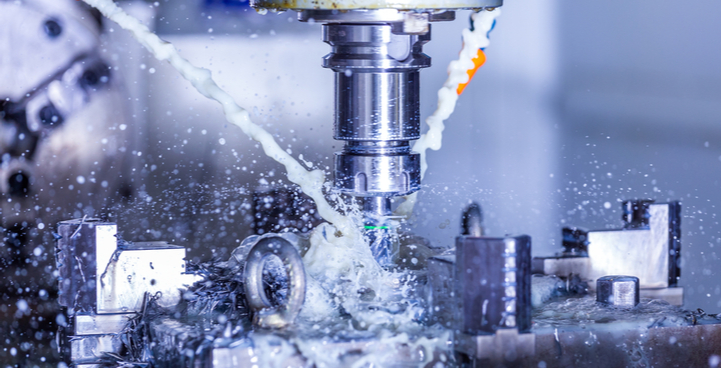
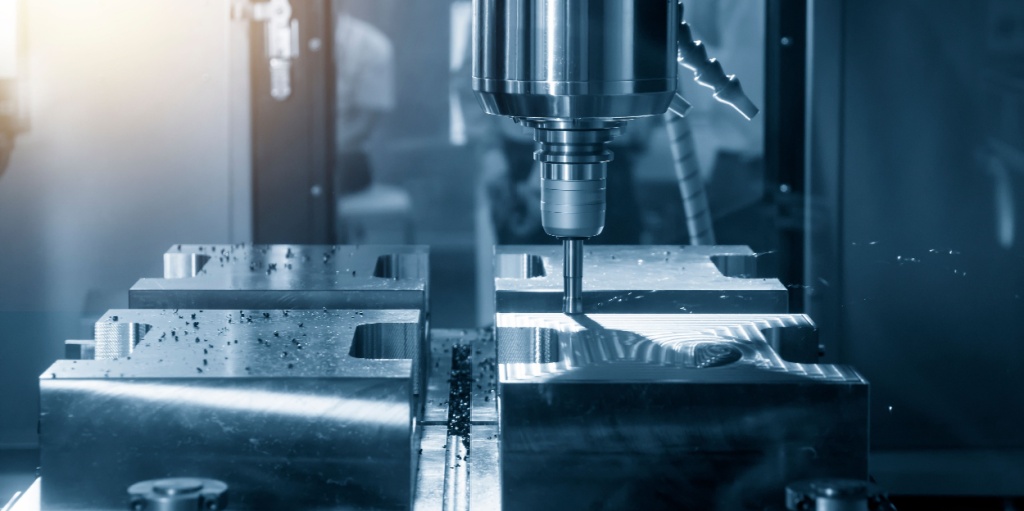
High-volume CNC milling is the use of CNC milling to machine the same part repeatedly across large production runs, scheduled releases, or recurring orders over time.
It is commonly used when manufacturers need to maintain:
- Consistent geometry across repeat runs
- Stable feature relationships between machined surfaces and features
- Repeatable part quality through controlled setups and inspection
- Reliable output across long production cycles
High-Volume Manufacturing With CNC Machining
Industrial manufacturing depends on machining processes that can handle repeat production, scheduled releases, and long-term part demand without disrupting broader operations. In these environments, CNC milling is often one of the CNC methods that drive part production, helping manufacturers produce the same components again and again as equipment is built, expanded, serviced, or replaced.
What Kind of Parts Are Commonly Produced Through High-Volume CNC Milling?
For manufacturers trying to meet bulk part production with CNC machining, milling is often used for repeat production parts that fall into a few common categories:
- Structural components: housings, covers, brackets, plates, mounts, and panels
- Flow-control components: manifolds and valve bodies
- Thermal-management components: heat sinks and thermal plates
- Production support: fixtures, tooling components, sensor hardware, end-of-arm robot tooling parts, and ink rollers
- Specialized equipment parts: microscope components, acrylic instrument parts, and other medical parts
These kinds of parts often return to production across long runs, repeat orders, and future equipment builds, which is why consistency and precision in mass production CNC machining remain so important over time.
What Industries Need High-Volume CNC Milling?
High-volume CNC milling is used across many of the industries that benefit from CNC machining, especially those that need repeat part production and dependable output. Common examples include:
- Automotive & EV
- Industrial Automation & Robotics
- Medical & Pharmaceutical Production
- Aerospace
- Military & Defense
- Packaging & Production Lines
- Food & Beverage
- Energy & Power Generation
Many of these industries depend on production parts that return to the schedule repeatedly, which keeps high-volume CNC machining closely tied to long-term equipment support.
Why CNC Milling Works Well for High-Volume Production Parts
CNC milling works well for high-volume production parts because it delivers controlled output over long runs and future releases. Once a part is set up for production, the same machining process can be used again with the consistency needed to keep output predictable.
Process control across long runs
High-volume production depends on machining workflows that can stay under control from one cycle to the next. In CNC milling, that often includes:
- Reliable workholding: Parts need to stay secure and properly positioned throughout the machining cycle so the same setup can be used across long runs without introducing unnecessary variation.
- Repeatable cutting paths: Tool movement needs to stay consistent from part to part so machined features are produced the same way across the full run.
- Documented machining parameters: Feed rates, speeds, tooling choices, and other process settings need to be defined clearly so the same approach can be repeated over time.
- Inspection routines that catch drift early: Ongoing inspection helps identify dimensional changes before they spread across a larger batch of parts.
Critical features that need to stay aligned
Many parts depend on more than basic dimensions. Mounting surfaces, holes, recesses, and other machined features all need to stay where they belong so components continue to fit and function within the same assembly.
Future releases using the same machining approach
Many parts come back as equipment is built, expanded, serviced, or replaced. CNC milling works well for this kind of demand by supporting large production releases and repeat orders through the same general machining approach.
What Affects Cost in High-Volume CNC Milling?
Cost in high-volume CNC milling usually comes down to how much time, tooling, setup effort, and inspection a part requires across the full run. The biggest factors often include:
- Part geometry and feature complexity: Deep pockets, thin walls, multiple machined faces, and harder-to-reach features usually take more time to produce.
- Material choice: Some materials machine quickly, while others increase tool wear, cycle time, or both. For example, aluminum behaves differently than stainless steel and impacts costs, durability, and production speed.
- Setup time and workholding: More involved fixturing or multiple setups can increase cycle times.
- Cycle time: Small differences in machining time add up quickly when the same part is run at volume.
- Inspection requirements: Tighter tolerances, added documentation, and more frequent checks can all increase cost.
- Order volume and release schedule: Large single runs and smaller repeat releases can affect pricing differently over time.
Frequently Asked Questions | CNC Milling for High-Volume Production Parts
When manufacturers evaluate CNC milling for high-volume work, the questions usually come down to part fit, cost control, repeat scheduling, and long-term production support. These FAQs focus on how milling fits real production demands over time.
What makes a part a good fit for high-volume CNC milling?
High-volume CNC milling is often a good fit when a part depends on flat surfaces, holes, recesses, mounting features, or other machined geometry that needs to stay consistent across long production runs.
It is commonly used for housings, brackets, plates, manifolds, covers, and other repeat components that return to production over time.
What usually affects cost in high-volume CNC milling?
Cost is usually affected by part complexity, material choice, setup time, cycle time, tooling wear, and inspection requirements.
In high-volume work, even small differences in machining time or setup efficiency can make a meaningful difference across the full run.
Can CNC milling handle repeat orders and future releases?
Yes. CNC milling is often used for parts that come back as equipment is built, expanded, serviced, or replaced.
That makes it a strong fit for production runs that need both large initial runs and repeat releases over time.
What industries commonly use high-volume CNC milling?
High-volume CNC milling is commonly used in automotive, industrial automation, medical manufacturing, aerospace, defense, packaging, food and beverage equipment, and energy-related manufacturing.
These industries often rely on repeat components that need to be produced across long runs, scheduled releases, and ongoing equipment support.
What information is most helpful when quoting high-volume CNC milling work?
The most helpful information usually includes:
- Part drawings or models
- Material requirements
- Expected quantities per run
- Release schedule or long-term demand
- Tolerance, inspection, or documentation requirements
- Any finishing, packaging, or secondary process needs
The clearer that production picture is upfront, the easier it is to evaluate setup approach, cycle time, and overall run planning.
Talk With Roberson Machine Company About High-Volume CNC Milling
High-volume CNC milling depends on process control, repeatable production, and a machining approach that can handle both large runs and future releases over time.
Roberson Machine Company takes on production machining projects or machines production parts for customers who need by building parts around consistent output and long-term part demand. Learn more about our team and capabilities, request a quote online, or call 573-646-3996 to discuss your CNC milling project.